10 Easy 3D Illusion Drawing Tutorials for Kids
🖍️ 10 free tutorials
Ready to trick the eye? These 10 optical illusion drawing tutorials are perfect for young artists ages 7+ looking to explore depth and perspective. All you need is a pencil, paper, and a steady hand to transform flat shapes into mind-bending 3D masterpieces.
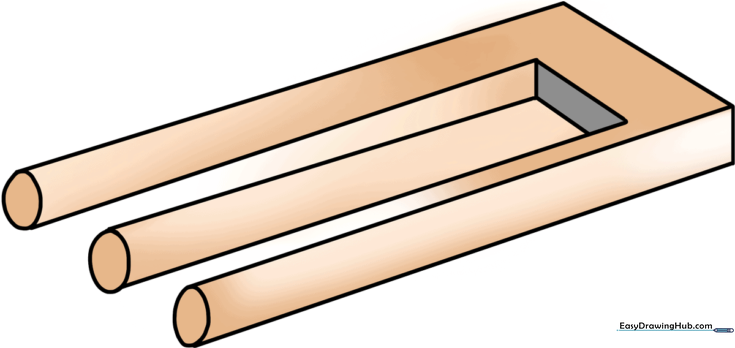
Impossible Trident
This classic 'blivet' shape is the perfect introduction to impossible geometry. Focus on how the shading transitions from the top of the cylinders to the negative space between the tines to sell the illusion.
Impossible Heart
Create a heart that defies physics! Use consistent line thickness to maintain the 'twisted' look. Tip: Keep your pencil lines light until you are sure about the overlapping sections.

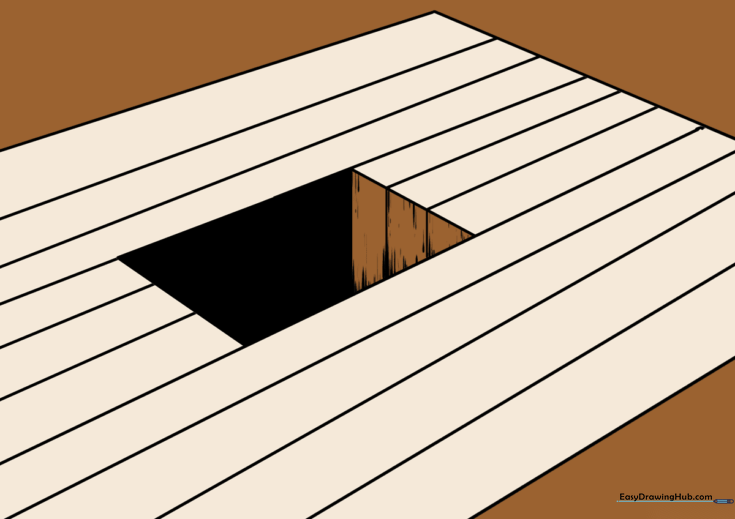
3D Hole
This is a crowd-pleaser! By drawing a trapezoid and adding floorboard lines that converge toward the center, you create a convincing 'pit' in your paper. Use a dark graphite pencil for the deepest part of the hole.
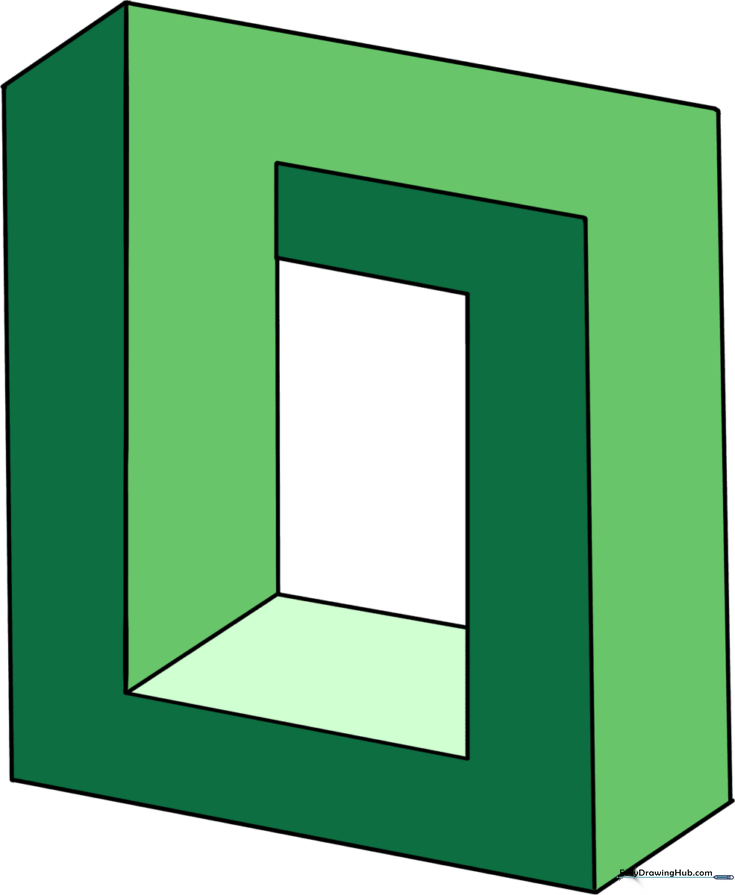
Impossible Square
Challenge your perception with this square that morphs into a cube. The key is the 'impossible' corner where the lines cross over each other. Practice drawing parallel lines to keep the shape clean.
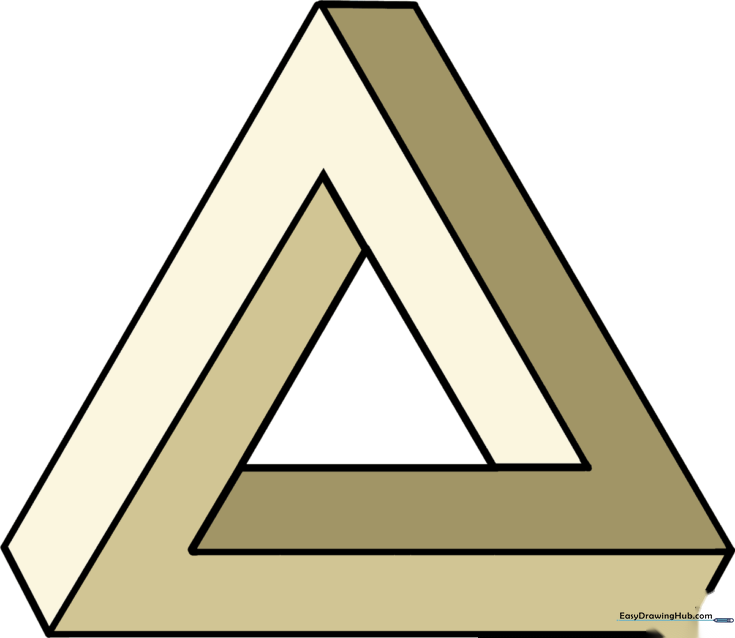
Impossible Triangle
The Penrose triangle is a staple of impossible art. Use three distinct shades—light, medium, and dark—to define the faces of the triangle and make the corners 'pop' with depth.
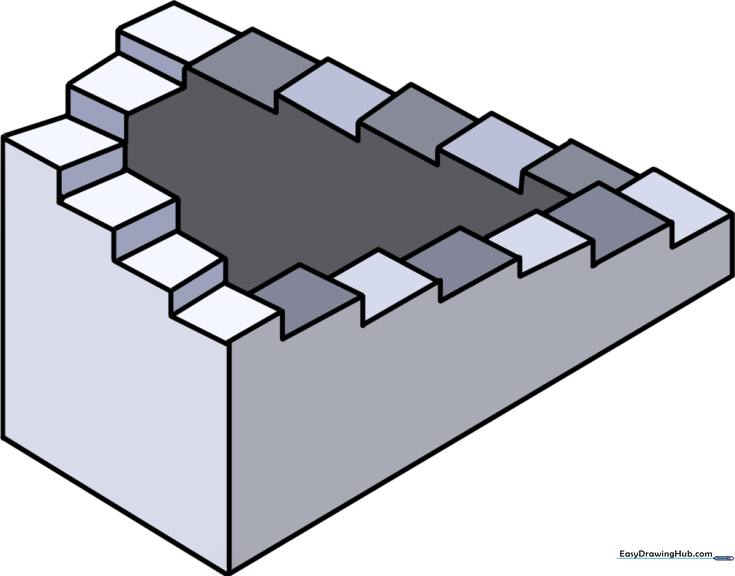
Impossible Stairs
Inspired by M.C. Escher, these stairs seem to loop forever. Focus on the vertical lines to ensure they remain parallel, which is essential for the 'up-and-down' illusion to work.
Impossible Cube
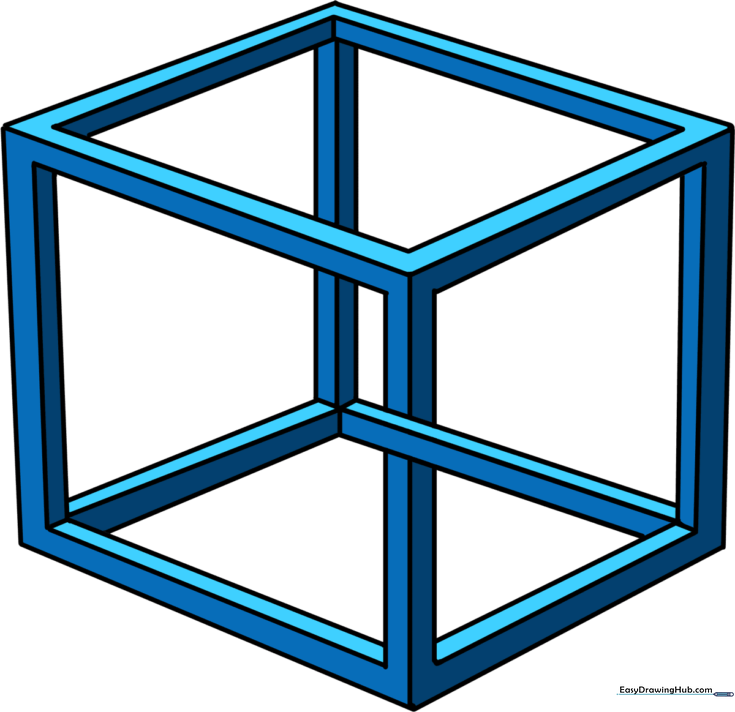
This cube plays with the viewer's brain by having edges that cross in front of and behind each other. Use a ruler for the straight lines to keep the structure looking precise and professional.
Impossible Star
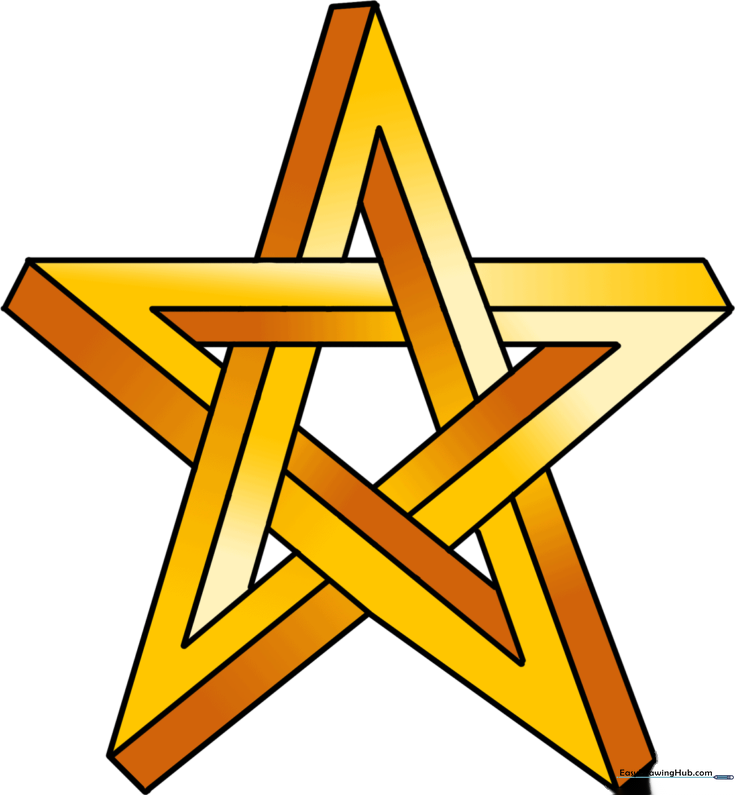
This star uses an interwoven pattern. The trick is to decide which line is 'on top' and which is 'underneath' before you start shading. It’s a great exercise in planning your composition.
Impossible Hexagon
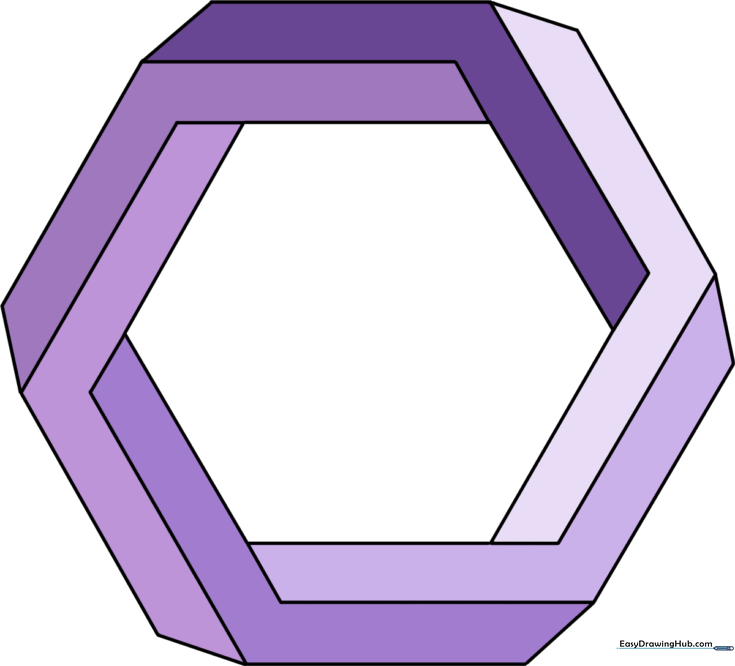
Similar to the triangle, the hexagon uses 'L' shaped segments to create a loop. Because of the wider angles, it’s actually easier to draw than the triangle—give this one a try if you're a beginner!
3D Stairs
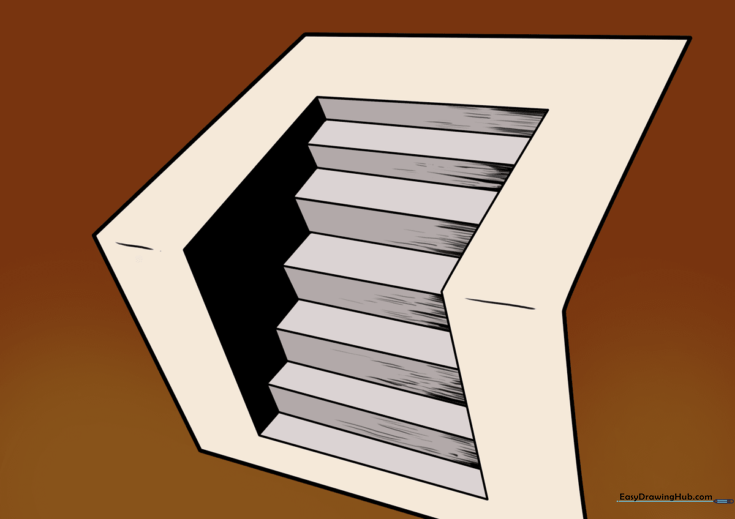
These stairs are grounded in reality but use perspective to look like they are popping off the page. Use varying line weights to show which steps are closer to the viewer.
More Collections