How to Draw a Rainbow Rose: Easy 10-Step Guide
Bring a burst of color to your sketchbook with this fun, screen-free activity perfect for artists ages 5 and up. You will only need a pencil, an eraser, and your favorite set of markers or colored pencils. Follow these simple steps to master the art of drawing a beautiful, multi-colored rose.
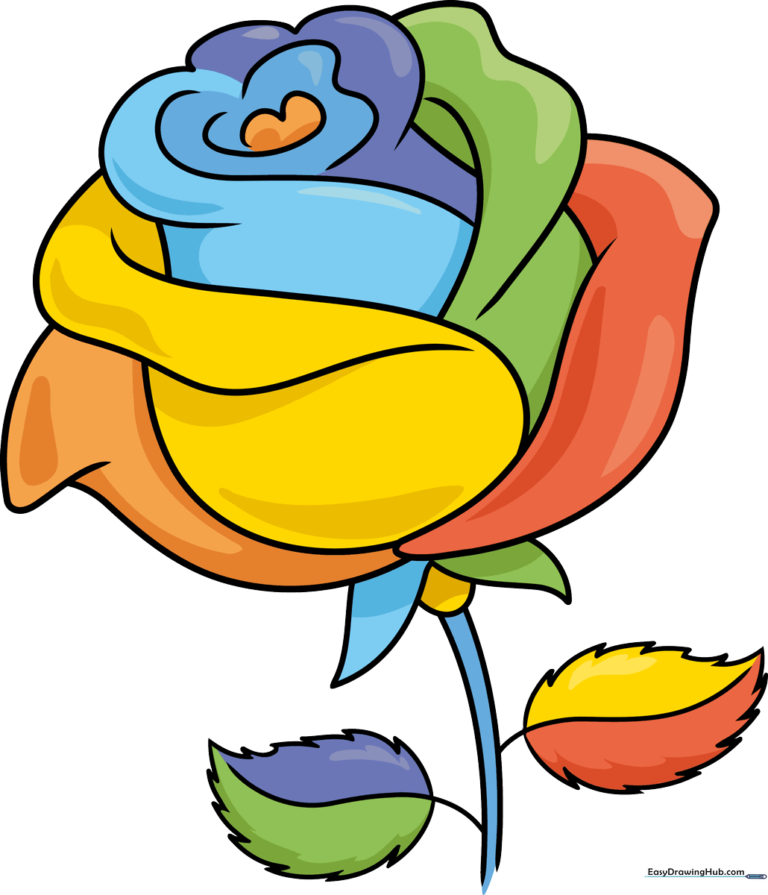
🎯 Final Result
Step-by-Step Instructions
Step 1: Sketching the Rosebud Center

Start by drawing the very tip of the rosebud. Use small, delicate curved lines to create an irregular spiral. Teacher's Tip: Keep your pencil pressure light here so you can easily adjust the shape if needed.
Step 2: Adding Inner Petals

Draw more curved lines around the center to form the inner petals. Tip: Notice how the lines overlap; this creates the illusion of depth and makes the flower look realistic.
Step 3: Expanding the Petal Structure

Continue building the flower by adding curved lines and a 'Y' shaped line to define the next layer of petals. Tip: Don't worry about making the petals perfectly symmetrical; nature is beautifully irregular!
Step 4: Defining Outer Petals

Use long, sweeping curved lines to outline the outer petals. Tip: Imagine the petals are wrapping around the center like a cozy blanket.
Step 5: Adding the Sepals
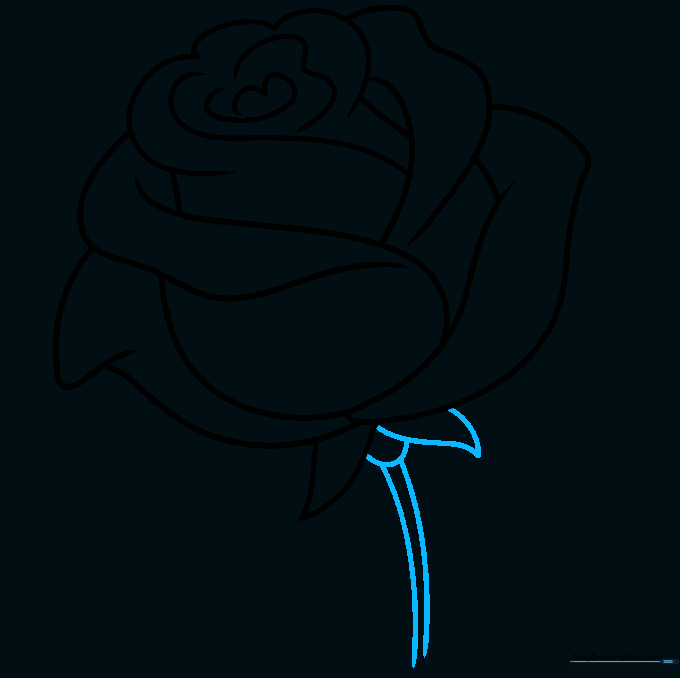
Add one more large outer petal, then draw a curved triangle at the base to form the sepal. Tip: The sepal is the small leaf that holds the flower head onto the stem.
Step 6: Drawing the Stem
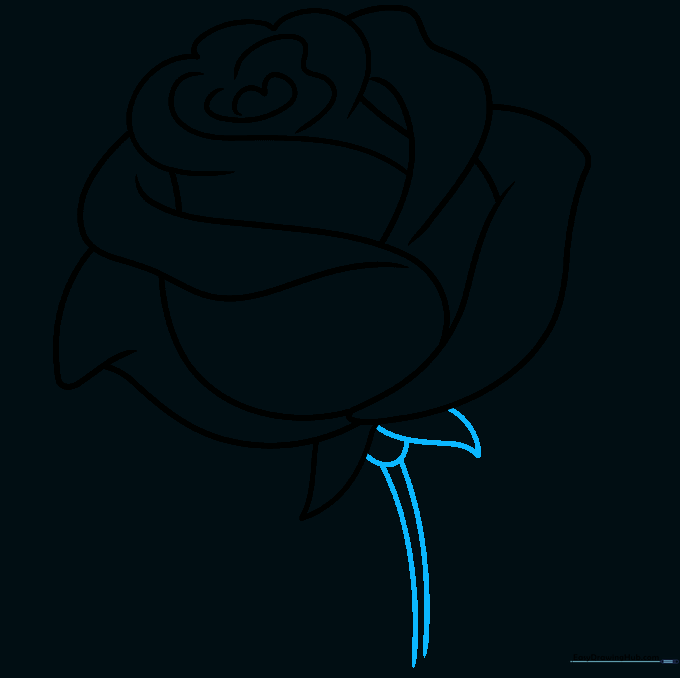
Draw a second triangular sepal and a half-circle between them. Extend two parallel curved lines downward to create the stem. Tip: Keep the stem lines smooth to show the rose is growing tall.
Step 7: Sketching the First Leaf

Extend a curved line from the stem for the leaf vein, then add the jagged, tooth-like edges of the leaf. Tip: Use short, quick strokes to make the leaf edges look realistic and textured.
Step 8: Adding the Second Leaf

Finish the bottom of the first leaf with more jagged lines, then start sketching a second leaf on the opposite side of the stem. Tip: Symmetry makes the drawing look balanced and professional.
Step 9: Finalizing the Outline

Complete the second leaf by adding the stem vein and finishing the jagged edges. Tip: Go over your final lines with a darker pencil or pen to make the drawing pop before you start coloring.
Step 10: Bringing Your Rainbow Rose to Life

Now for the fun part! Color each petal using the colors of the rainbow: red, orange, yellow, green, blue, indigo, and violet. Tip: Use light pressure for a soft look or heavy pressure for vibrant, bold colors.
More Tutorials


