How to Draw a Ladybug: Simple 10-Step Guide for Kids
Bring nature to life with this simple ladybug drawing guide, designed specifically for young artists ages 5 and up. You only need a pencil, an eraser, and a piece of paper to get started. Follow along to build confidence in your sketching skills while creating a charming garden friend.
🎯 Final Result
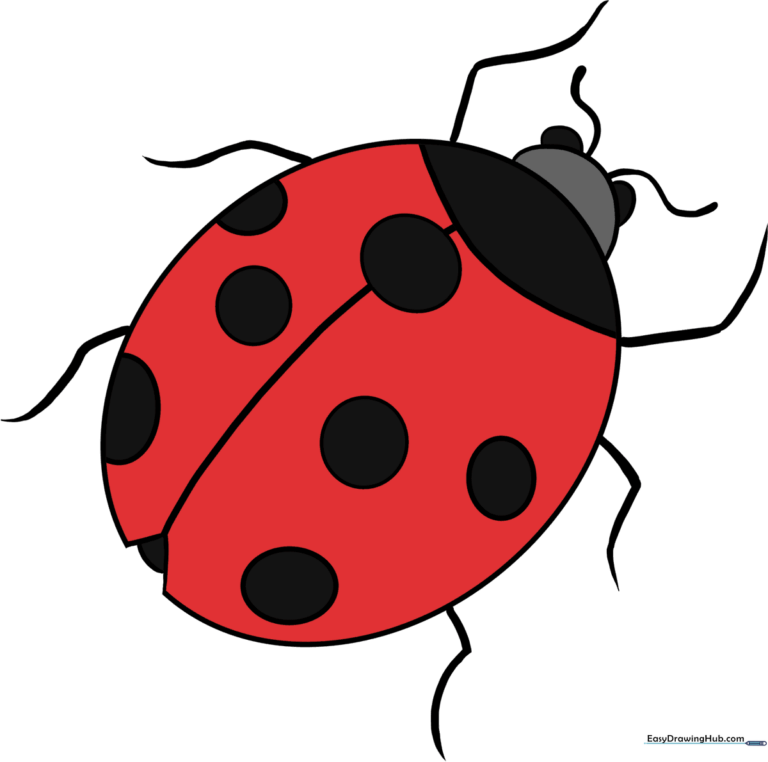
Step-by-Step Instructions
Step 1: Sketching the Body

Draw a large, rounded oval to serve as the ladybug’s body. Teacher's Tip: Keep your pencil lines light and loose so you can easily adjust the shape if it looks a bit lopsided.
Step 2: Defining the Head and Thorax

Add a small half-circle at the front for the head, and draw a curved line behind it to section off the thorax. Teacher's Tip: Think of the head as a small cap sitting on the edge of the oval.
Step 3: Creating the Wing Split

Draw a long, smooth curved line down the center of the back. Teacher's Tip: This line represents the wings; imagine it’s a zipper that allows the ladybug to open its shell and fly.
Step 4: Adding Initial Spots

Sketch a few small circles on the back. Teacher's Tip: Don't worry about making them perfect circles—nature is full of variety, so different sizes look more realistic!
Step 5: Filling in More Spots

Add a few more spots to fill out the pattern. Teacher's Tip: Try to balance them on both sides of the center line for a symmetrical, clean look.
Step 6: Drawing Antennas and Eyes

Add two curved lines for antennas and two small half-circles for eyes. Teacher's Tip: Keep the antennas thin and delicate; they are sensory organs, not heavy branches!
Step 7: Sketching the Legs

Draw three segmented legs on each side of the body. Teacher's Tip: Use short, angled lines to give the legs a 'jointed' look, which makes the insect appear more active.
Step 8: Adding Shell Detail

Draw two small lines to create a triangular notch at the back of the shell. Teacher's Tip: This small detail adds depth and makes your drawing look more professional.
Step 9: Refining the Outline

Add a small curved line inside the triangle to show the body underneath. Teacher's Tip: Use a darker pencil stroke here to define the edges of the shell clearly.
Step 10: Bringing it to Life with Color

Color your ladybug! While red is classic, try orange, yellow, or even green. Teacher's Tip: Use a black marker for the spots to make them pop against the bright shell color.
More Tutorials