How to Draw a Floral Design: Easy Step-by-Step Guide
Create your own whimsical floral garden with this beginner-friendly drawing tutorial. Designed for artists ages 5 and up, this project uses basic shapes to build confidence and artistic flow. All you need is a pencil, an eraser, and your favorite coloring supplies to bring this bouquet to life.
🎯 Final Result
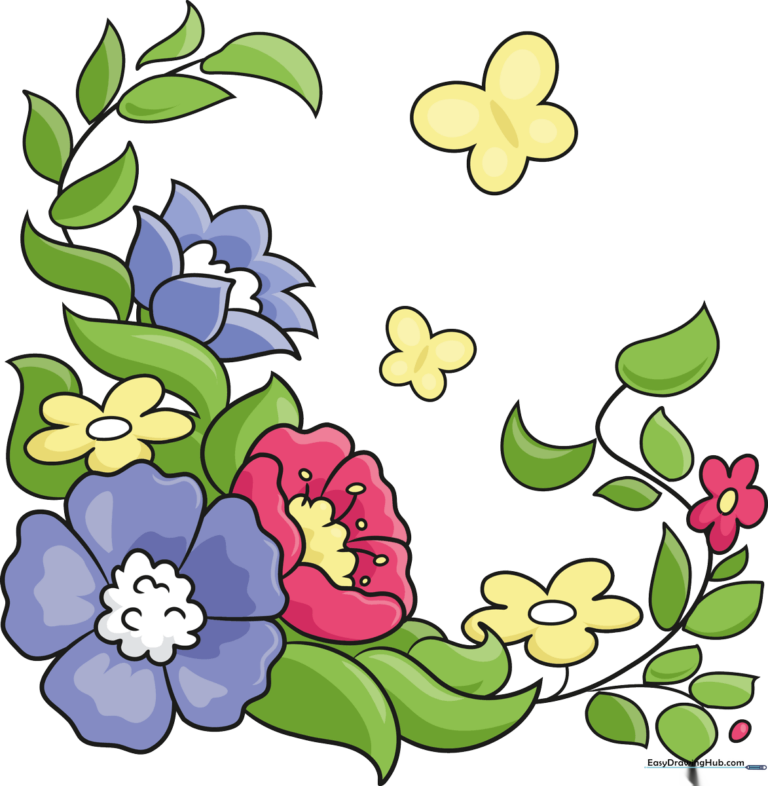
Step-by-Step Instructions
Step 1: Sketching the Center and First Petals

Start by drawing a small circle for the flower center, then add three wavy, rounded petals around it. Teacher's Tip: Keep your lines loose and flowy—flowers look best when they aren't perfectly symmetrical!
Step 2: Adding Texture and More Petals

Finish the first flower with five petals total, adding small dashes inside the center for texture. Then, begin outlining a second flower nearby. Teacher's Tip: Use short, quick strokes for the center texture to make it look like real pollen.
Step 3: Drawing Stamens and Leaves

Add a second blossom from a side angle, including small ovals at the end of lines to represent anthers. Add a pointed leaf to the side. Teacher's Tip: When drawing leaves, press down slightly harder at the base and lift your pencil at the tip for a natural point.
Step 4: Building the Garden

Draw a third flower above the others using 'U' shaped petals and add several more leaves below. Teacher's Tip: Vary the size of your leaves to create depth and make your garden look lush.
Step 5: Adding a Daisy

Draw a daisy with a clear oval center and add more leaves around it to fill the space. Teacher's Tip: Daisies have many petals; don't worry about counting them, just keep them overlapping slightly.
Step 6: Drawing Stems and New Blooms
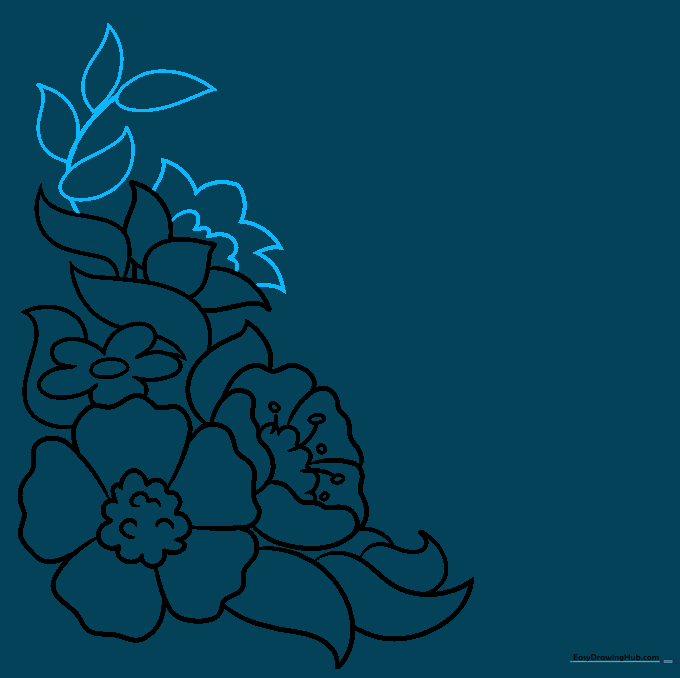
Turn some leaf shapes into new flowers and draw a long, curved stem reaching upward. Teacher's Tip: A long, sweeping line for the stem helps guide the viewer's eye across your drawing.
Step 7: Expanding the Bouquet

Add more leaves to the top stem and a second stem at the bottom. Include another daisy to balance the composition. Teacher's Tip: Balance your drawing by placing flowers on both sides of the page.
Step 8: Adding Final Floral Details

Extend your stems further and add one more flower to fill any empty gaps. Teacher's Tip: If you have a large empty space, add a small leaf or a tiny bud to keep the design looking full.
Step 9: Adding Butterflies
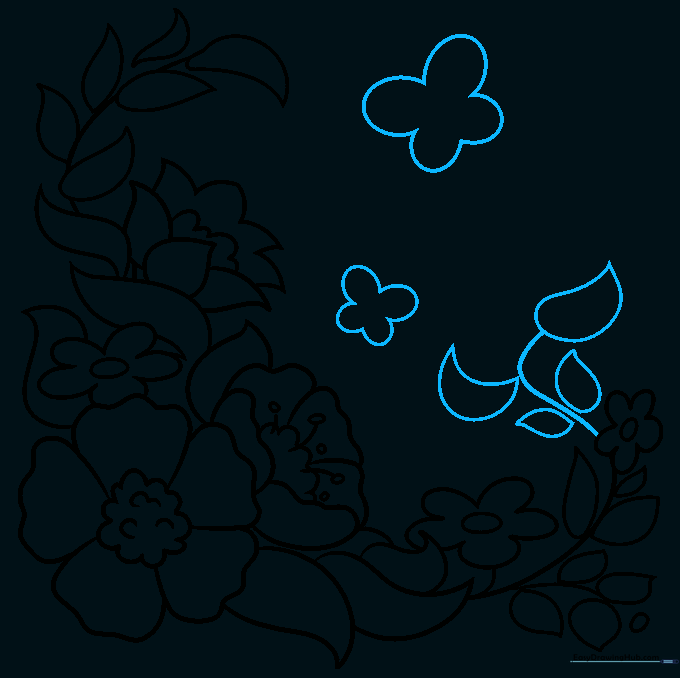
Bring your garden to life by drawing simple butterflies using 'U' shaped wings. Teacher's Tip: Make the top wings slightly larger than the bottom ones to give the butterfly a realistic, fluttering look.
Step 10: Adding Color
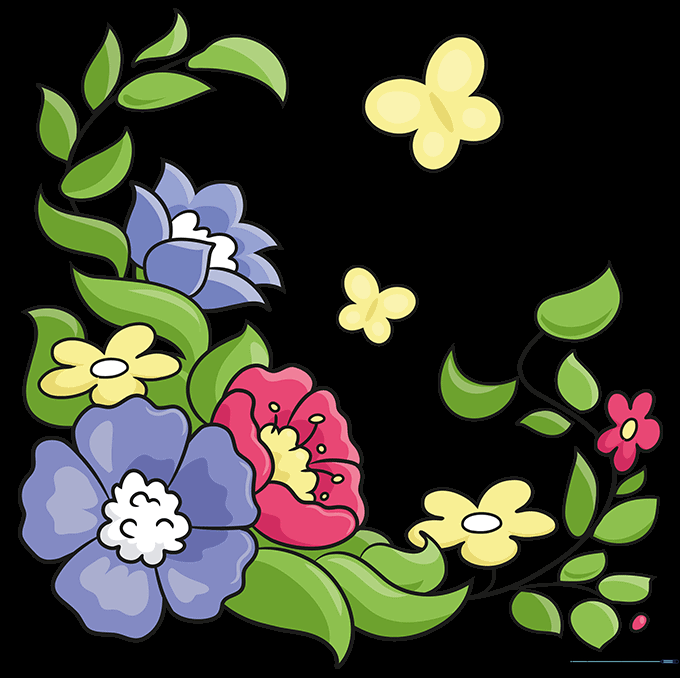
Color your design using bright, cheerful shades. Use darker colors for the butterfly bodies and lighter colors for the wings. Teacher's Tip: Use a light touch with your colored pencils to blend colors together for a professional look.
More Tutorials


