How to Draw a Dog Pixel Art: Simple 10-Step Guide
Looking for a fun, screen-free way to practice focus and logic? This pixel art dog tutorial is perfect for kids and beginners using graph paper or a digital grid. You only need a pencil and a steady hand to build this adorable pup square by square.
🎯 Final Result
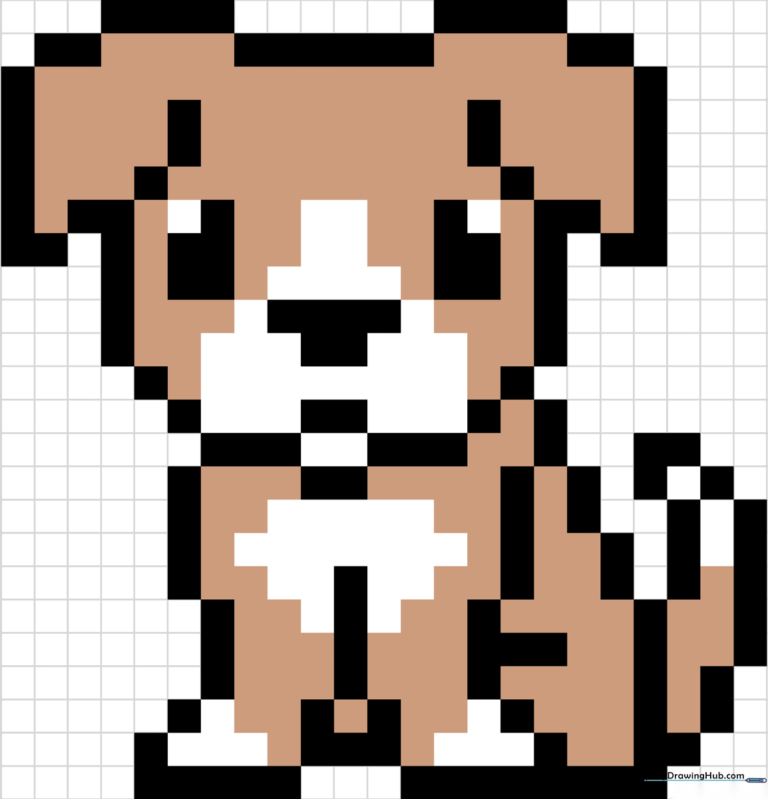
Step-by-Step Instructions
Step 1: Mapping the Face and Eyes
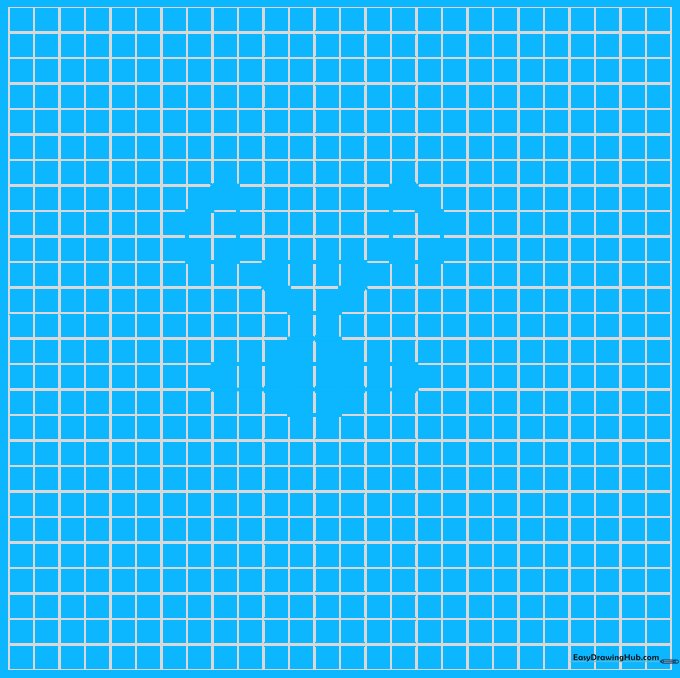
Start by shading the dog's face. Use blocks of five squares for the eyes and rows of four and two for the nose. Teacher's Tip: Count your grid squares carefully before shading; it’s much easier to fix a counting error now than after you've colored the whole face!
Step 2: Defining the Face Shape
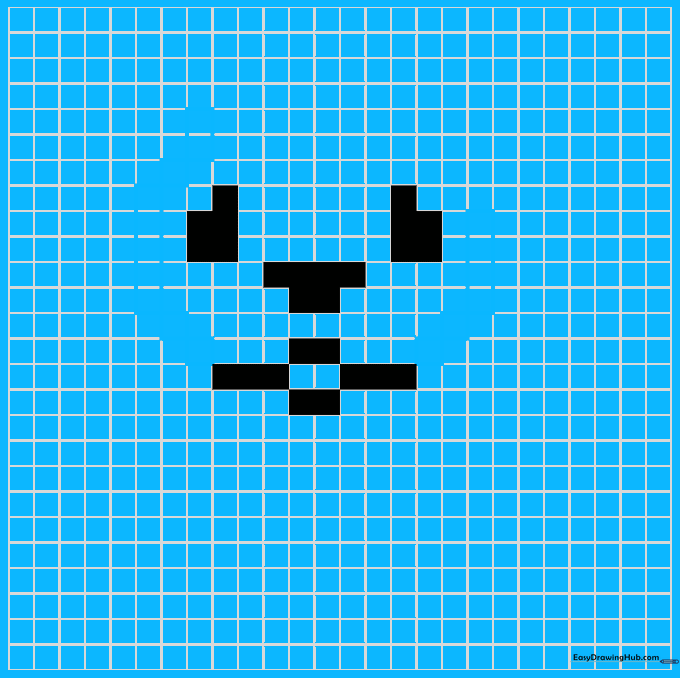
Outline the dog's face using single squares and columns. Teacher's Tip: Keep your pencil strokes light if you are working on paper, so you can easily erase if a square goes out of alignment.
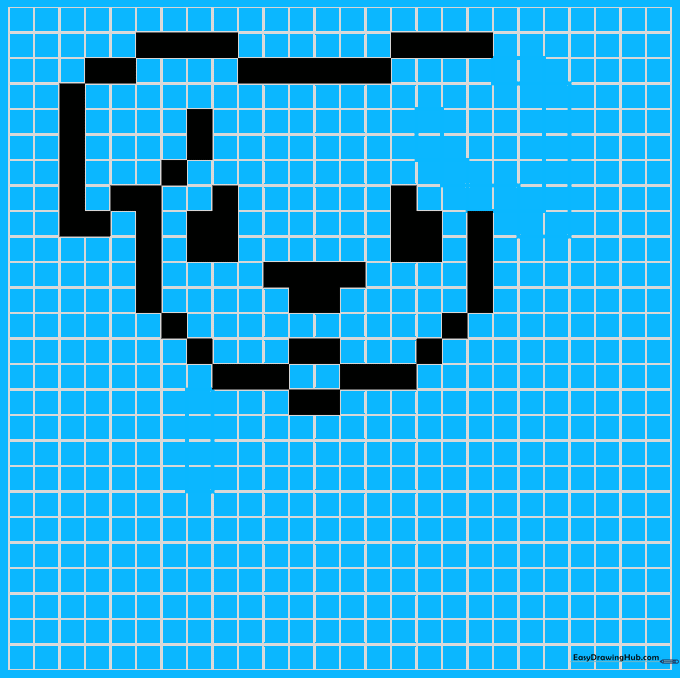
Step 3: Drawing the First Ear
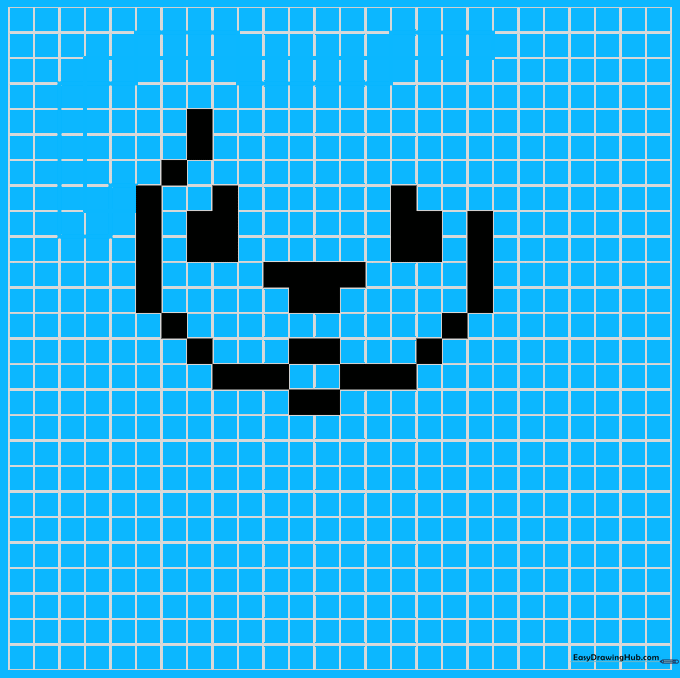
Outline the first ear and the top of the head. Use an 'L' shaped series of squares. Teacher's Tip: Pixel art is all about patterns; look for the 'L' shape in the grid to ensure your proportions match.
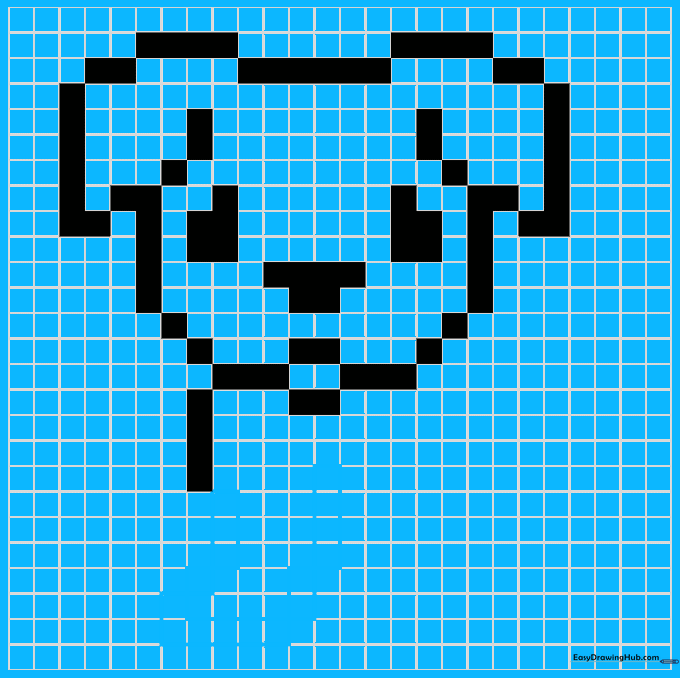
Step 4: Mirroring the Second Ear
Outline the second ear to mirror the first. Teacher's Tip: Symmetry can be tricky! Use your finger to trace the distance from the center of the head to the first ear, then repeat that distance for the second ear.
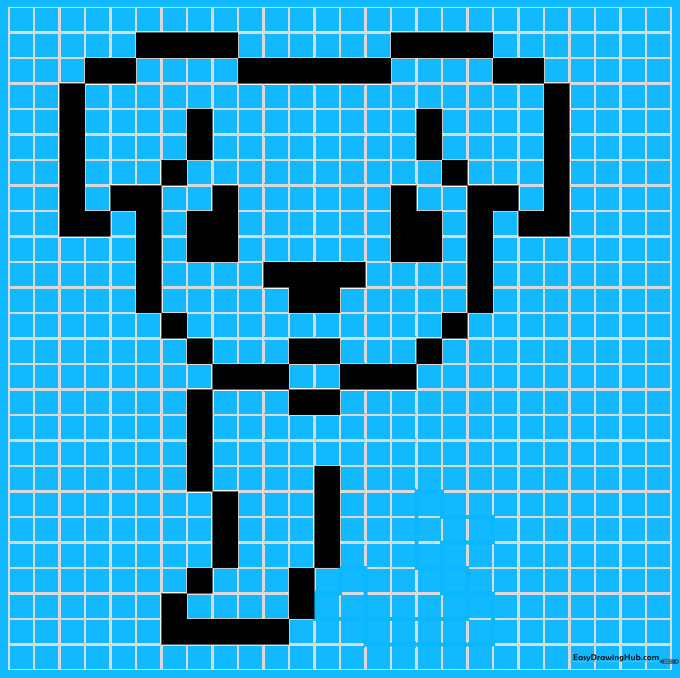
Step 5: Sketching the First Leg
Outline the puppy's front leg using columns of two to four squares. Teacher's Tip: Ensure the leg connects directly to the chin area to keep the character looking sturdy.
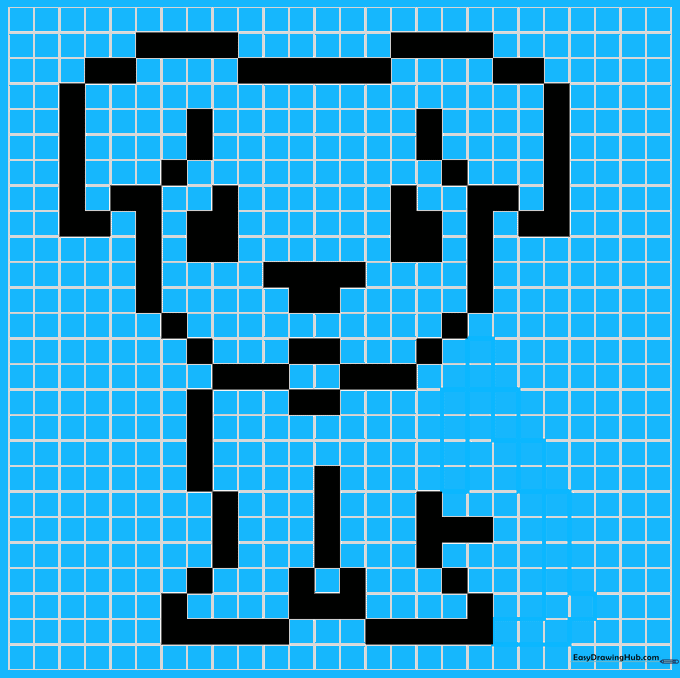
Step 6: Adding the Second Leg
Outline the remaining leg using 'V' and 'L' shaped segments. Teacher's Tip: This leg should be slightly offset to show depth, making your pixel dog look like it's standing in 3D space.
Step 7: The Back and Shoulders
Outline the back and shoulders using vertical columns. Teacher's Tip: Connect the corners carefully to create a smooth, blocky silhouette for the dog's back.
Step 8: Tail and Face Details
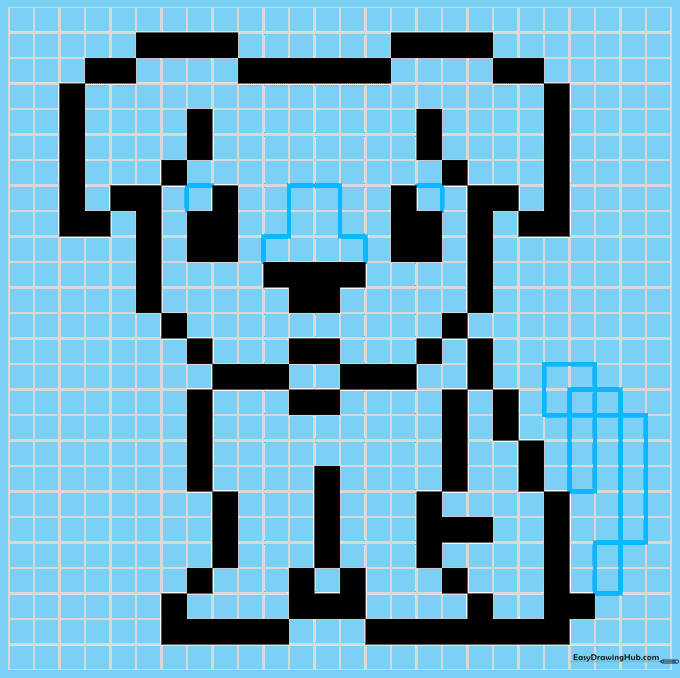
Finish the tail and add facial details like the eyes and nose. Teacher's Tip: For the face details, use a thinner line or just trace the grid edges to make the eyes pop against the rest of the blocky body.
Step 9: Adding Markings
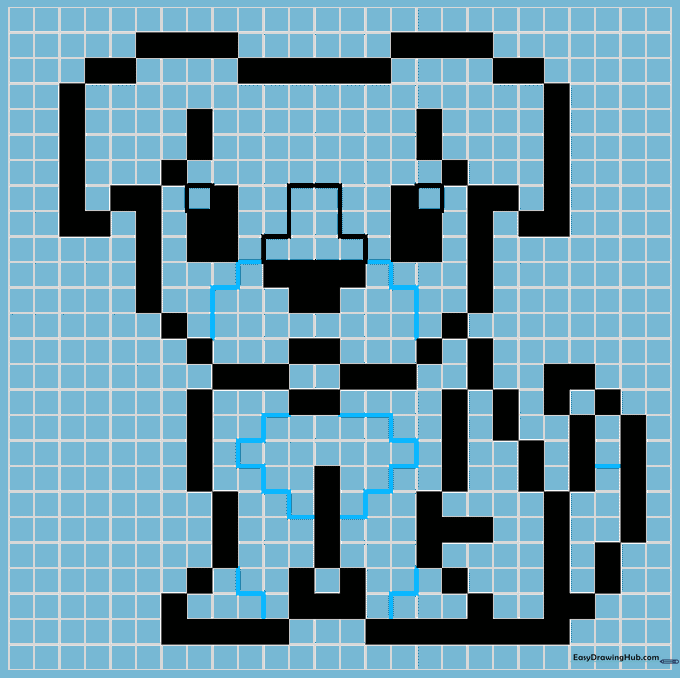
Add spots and markings to the mouth, chest, and feet. Teacher's Tip: These markings are great for practicing color planning—decide where your dog's 'patches' will be before you start coloring.
Step 10: Bring Your Dog to Life with Color
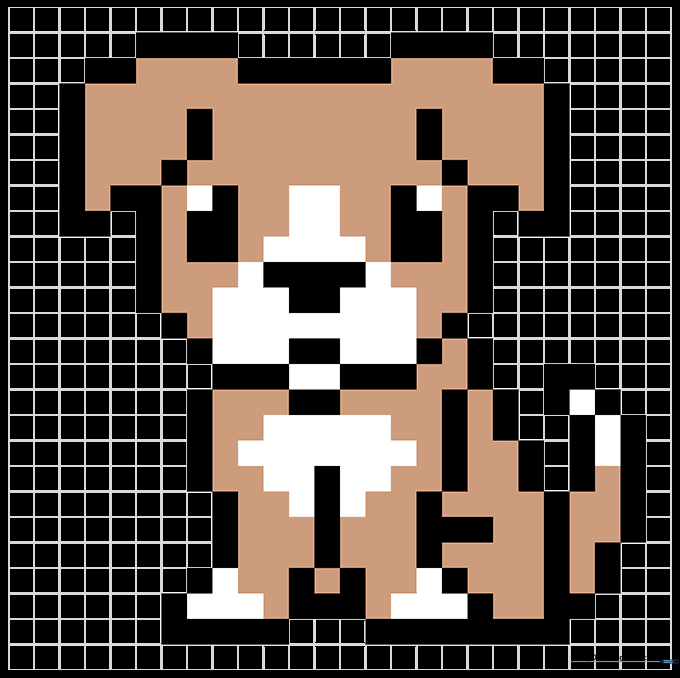
Time to color! Use your favorite markers or crayons. Teacher's Tip: Try using two shades of brown to give your dog a more realistic, textured look, or go wild with neon colors for a fun, modern pixel style!
More Tutorials


