How to Draw a Bow and Arrow: Easy 10-Step Guide
Ready to sharpen your artistic aim? This tutorial is perfect for young artists ages 6+ looking to draw a classic bow and arrow. Grab a pencil, an eraser, and a piece of paper to follow along as we break down this complex shape into simple, manageable lines.
🎯 Final Result
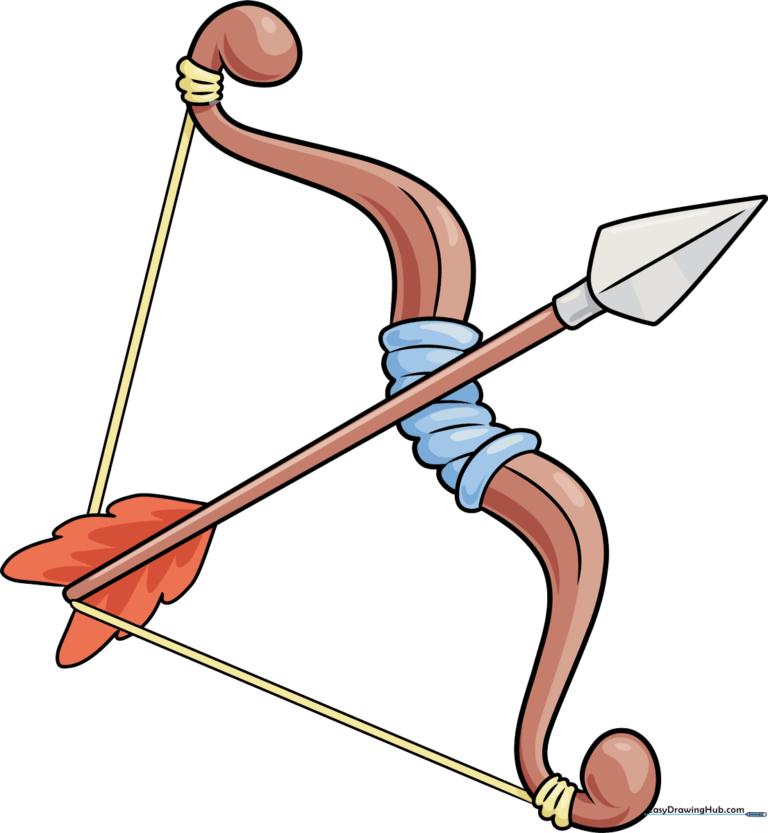
Step-by-Step Instructions
Step 1: Sketching the Bow Tip

Start by drawing the top tip of the bow. Use two connected curved lines to create a pointed shape. Teacher's Tip: Keep your pencil pressure light here so you can easily adjust the symmetry if the tip looks a bit lopsided.
Step 2: Defining the Upper Limb
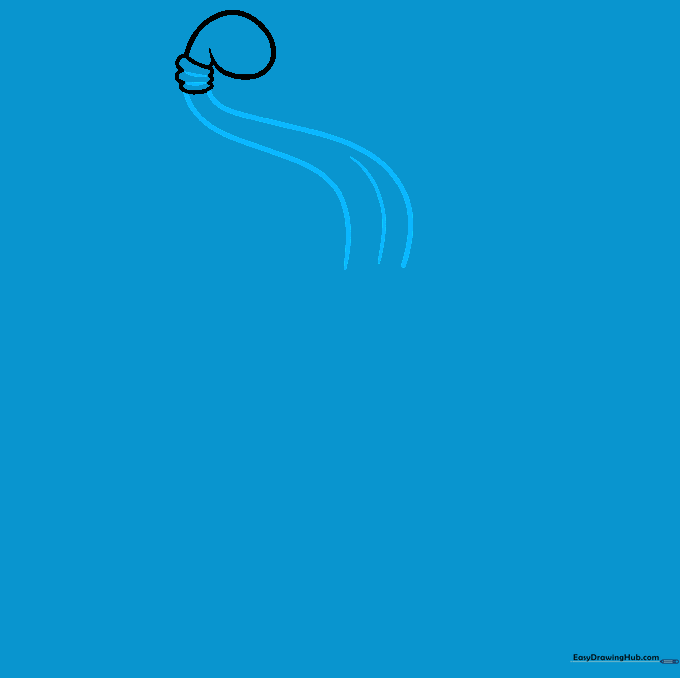
Add the string notch below the tip, then extend two long, graceful curved lines downward to form the upper limb. Draw a single line down the center to add depth. Tip: Imagine the bow is made of flexible wood; keep your curves smooth and fluid.
Step 3: Creating the Handle Riser
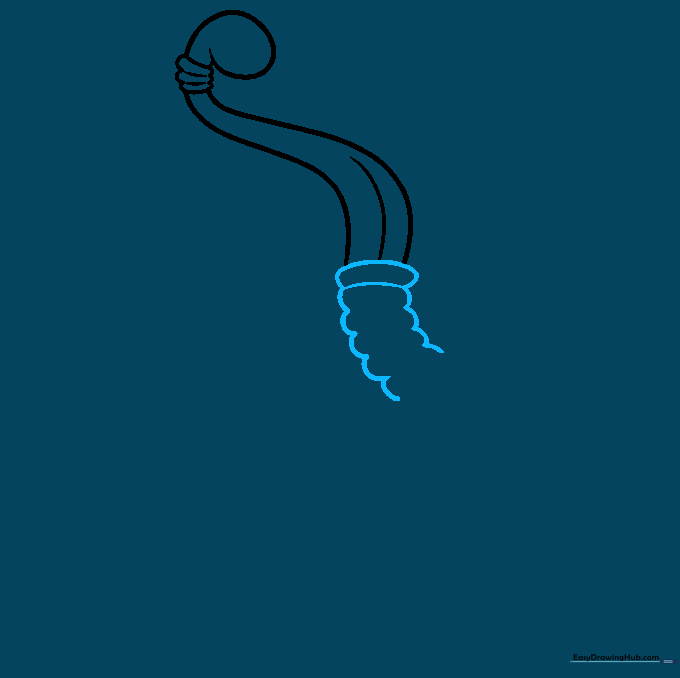
Draw the center handle riser by connecting curved lines across the bottom of the limb. Add the grip section beneath it using connected curved lines. Tip: This is the 'heart' of the bow, so make sure the grip looks sturdy and comfortable.
Step 4: Shaping the Lower Limb
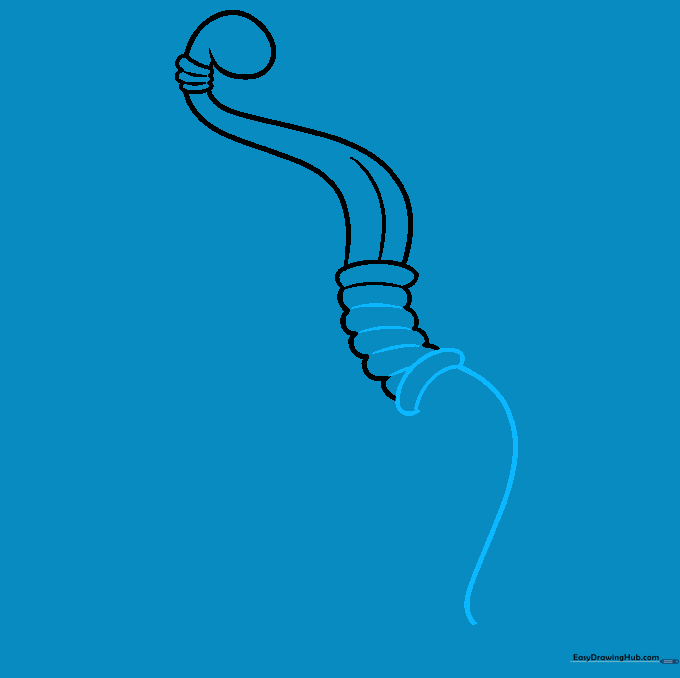
Add texture lines to the grip for realism, then extend a long, sweeping curved line to form the back of the lower limb. Tip: Use a 'C' motion with your wrist to get that perfect, natural curve of the bow's wood.
Step 5: Finishing the Lower Limb
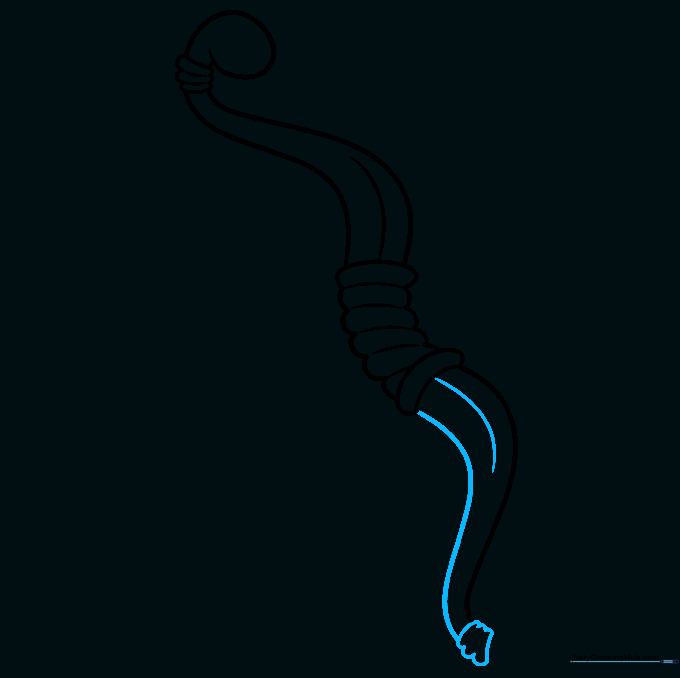
Complete the lower limb by drawing the inner side and adding the bottom string notch. Add a center line to match the upper limb. Tip: Check that your bow looks balanced—if one side is much longer, just erase and adjust!
Step 6: Sketching the Arrow Shaft
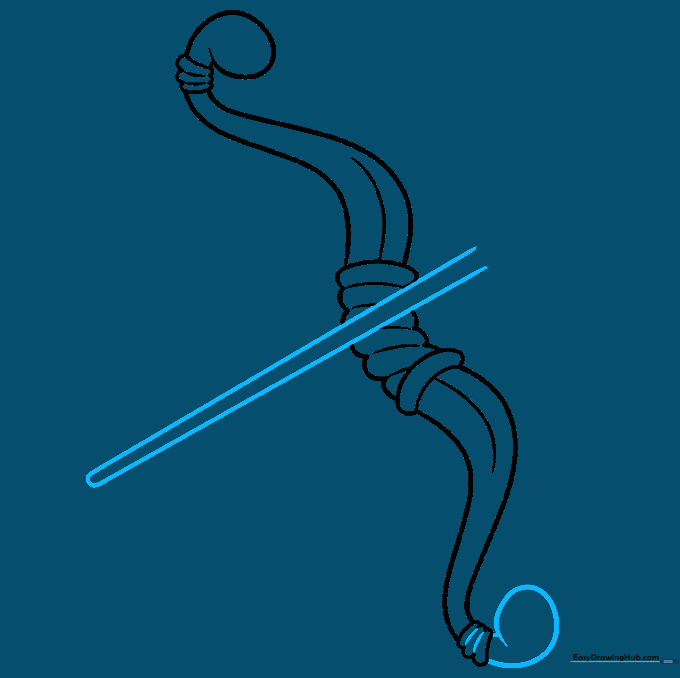
Draw two long, parallel straight lines to create the arrow shaft. Connect them at the end. Tip: Use a ruler if you want the arrow to look perfectly straight, or freehand it for a more organic, 'adventurer' look.
Step 7: Adding the Arrowhead
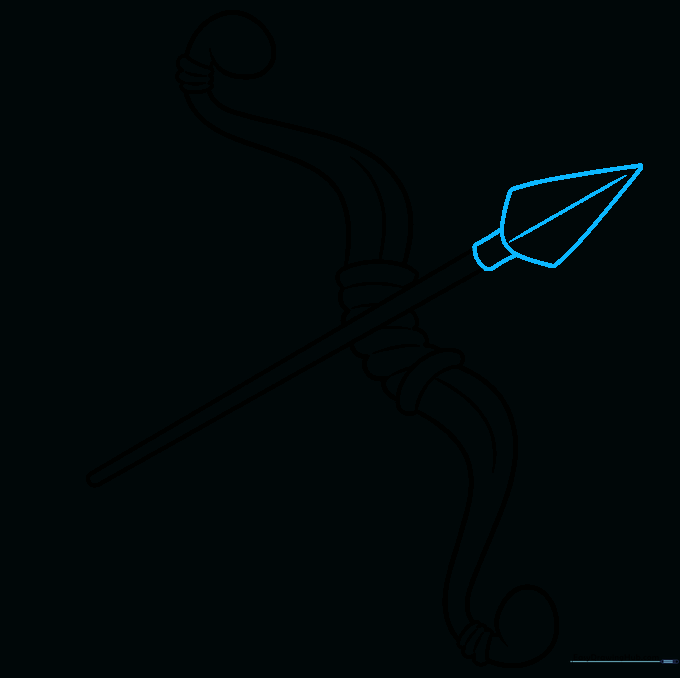
Draw a small rectangle at the tip, then sketch a triangle shape on top to form the arrowhead. Add a line down the center for detail. Tip: Make the arrowhead sharp and pointy to give it a realistic look.
Step 8: Drawing the Bowstring and Fletching
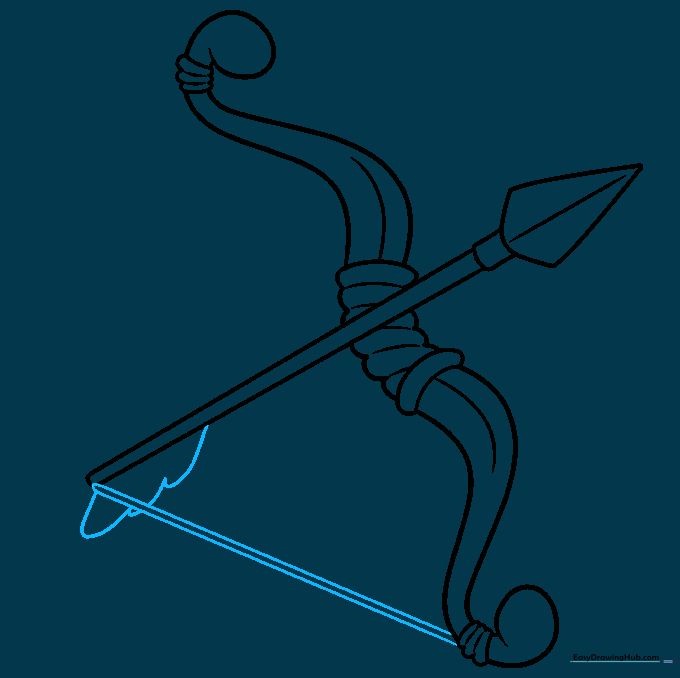
Draw parallel lines connecting the arrow to the lower notch. Add the fletching (feathers) at the back of the arrow using soft, curved lines. Tip: Feathers are fluffy, so don't worry about making them perfectly straight—a little texture makes them look real!
Step 9: Completing the Bowstring
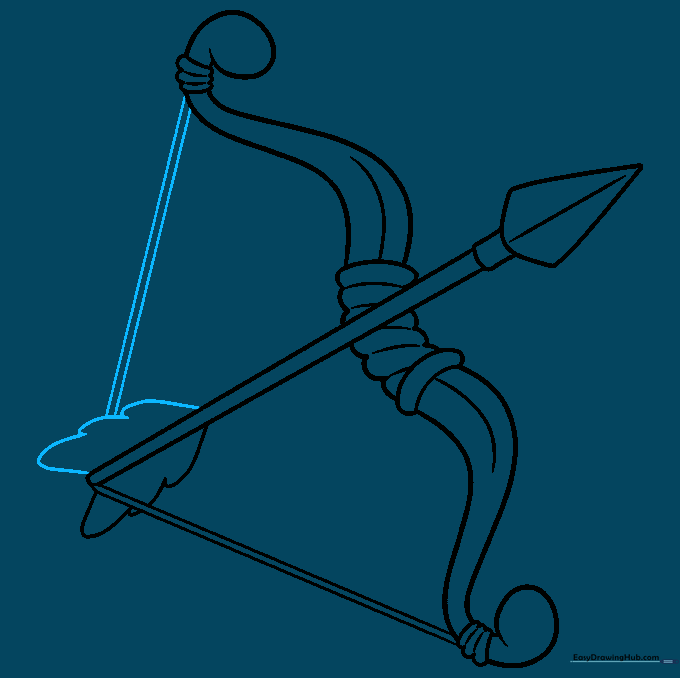
Finish the fletching on the other side and draw the remaining bowstring line up to the top notch. Tip: Ensure the string looks taut, as if it's ready to be pulled back!
Step 10: Adding Color
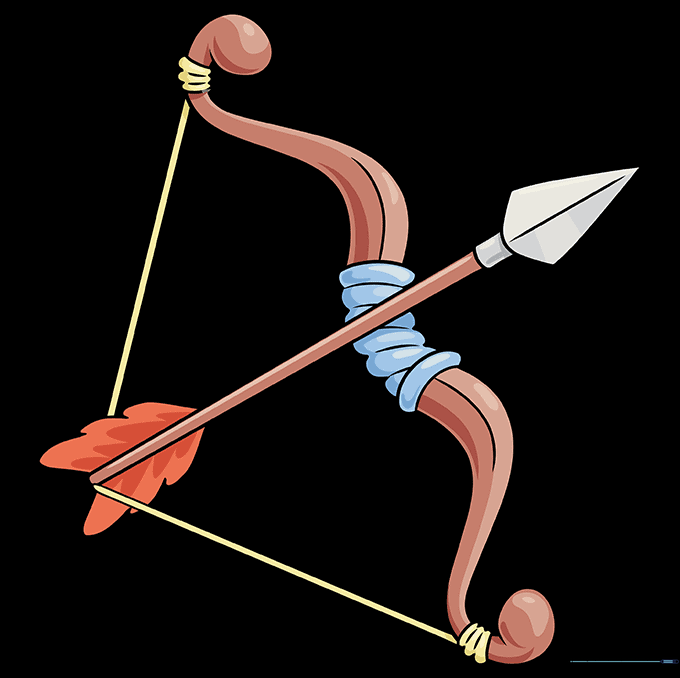
Time to bring your drawing to life! Use brown for the wood, silver or grey for the arrowhead, and your favorite colors for the feathers. Tip: Try adding a little shading on one side of the bow to make it look 3D.
More Tutorials


