How to Draw Venus: Easy 9-Step Space Art Guide
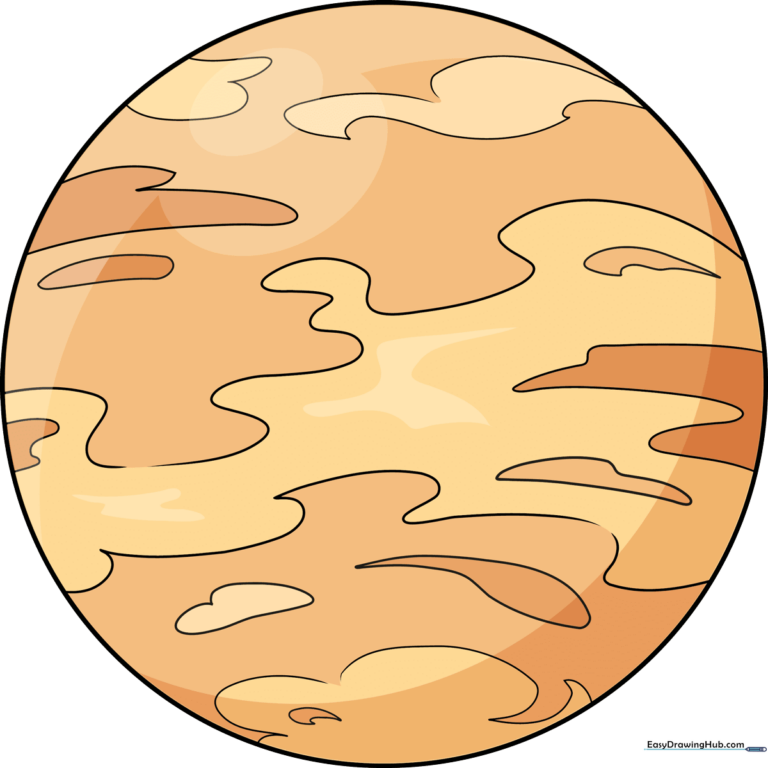
Ready to explore our solar system through art? This tutorial is perfect for young astronomers ages 5+ to practice drawing spheres and organic cloud patterns. You will only need a pencil, an eraser, and your favorite orange or yellow coloring tools to bring this mysterious planet to life.
🎯 Final Result
Step-by-Step Instructions
Step 1: Sketching the Planetary Base
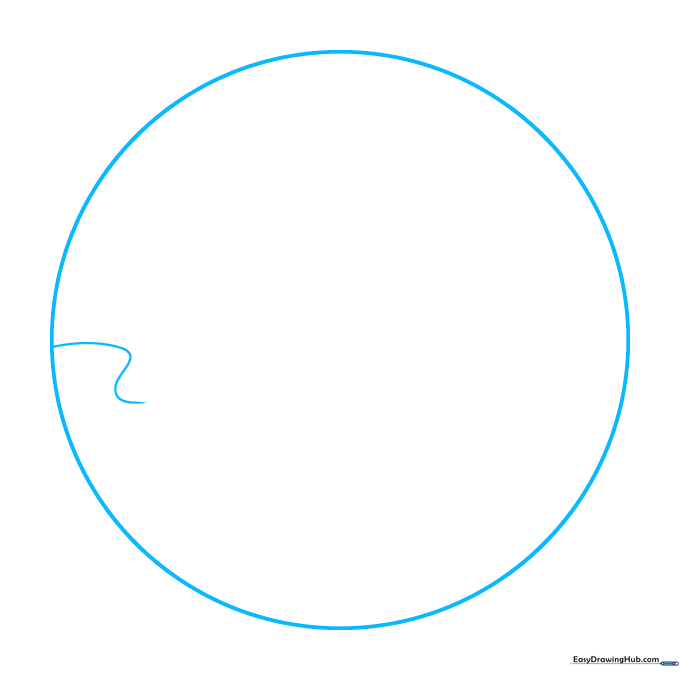
Draw a large, neat circle to form the body of Venus. Teacher's Tip: Use a light touch with your pencil so you can easily erase any overlapping lines later.
Step 2: Adding Atmospheric Bands
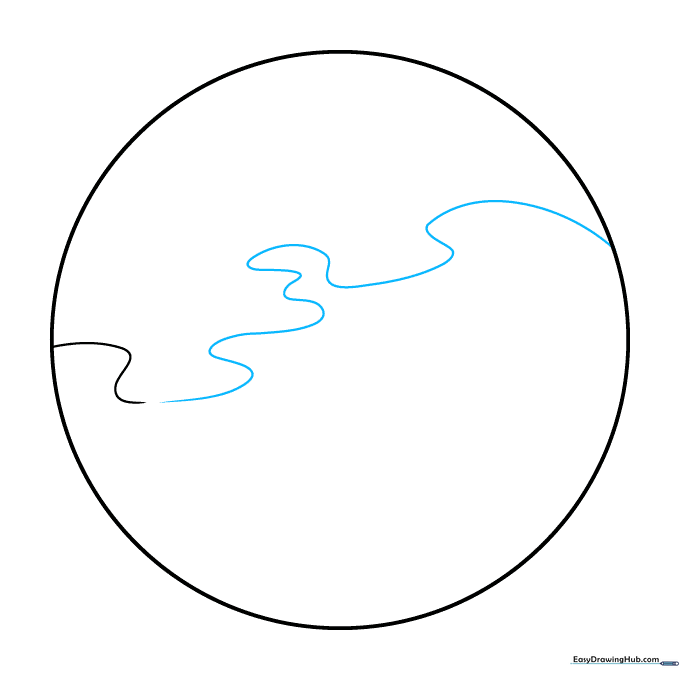
Draw a wavy line across the center of your circle to represent the thick, swirling clouds of Venus. Tip: Keep your wrist loose to make the line look fluid and natural.
Step 3: Layering the Clouds
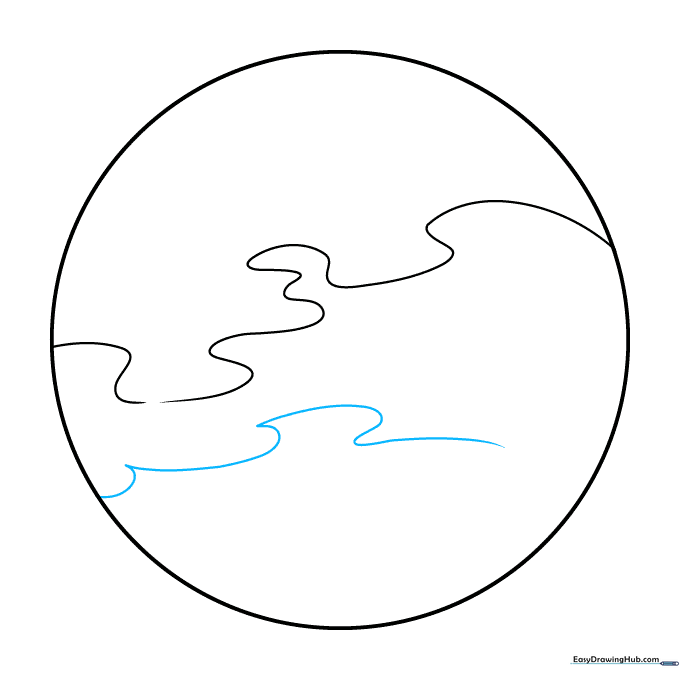
Add a second wavy line below the first one. This helps create the illusion of depth in the planet's dense atmosphere.
Step 4: Creating Cloud Texture
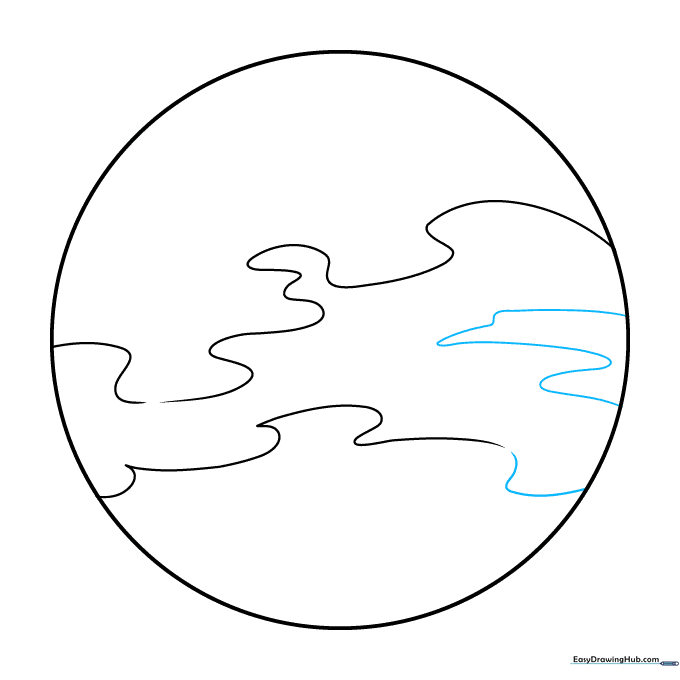
Draw additional wavy lines between your first two lines. Tip: Vary the curves—some should be shallow and others deeper to make the clouds look realistic.
Step 5: Defining Cloud Shapes
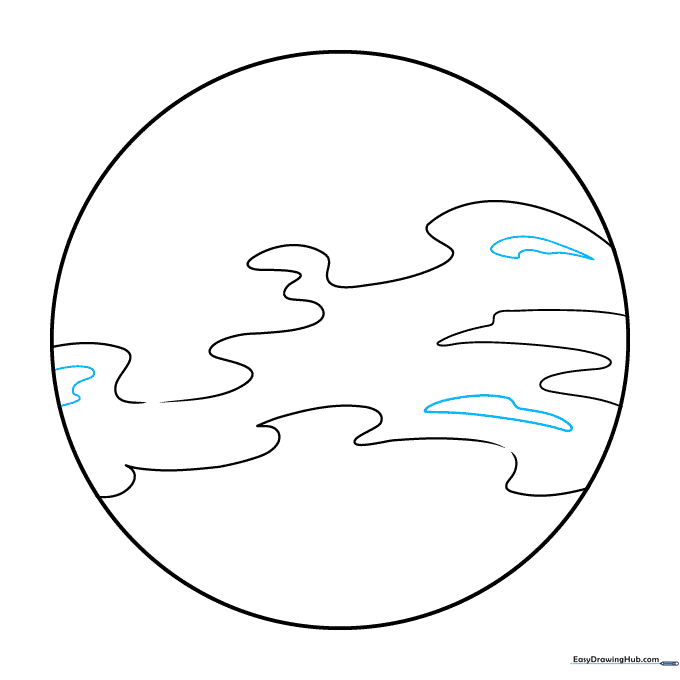
Enclose small, irregular rounded shapes within the bands of clouds. This gives the atmosphere a textured, swirling appearance.
Step 6: Northern Pole Details
Add a new band of wavy lines near the top of the circle. This represents the cloud patterns at the planet's northern pole.
Step 7: Adding Northern Texture
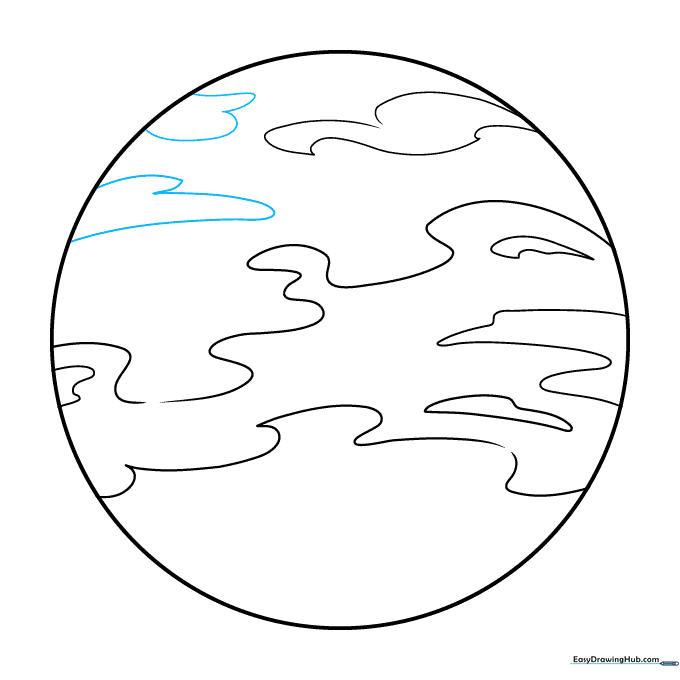
Use curved lines to enclose more irregular shapes near the top. Tip: Don't worry about making them perfect; clouds in space are always changing shape!
Step 8: Southern Pole Details
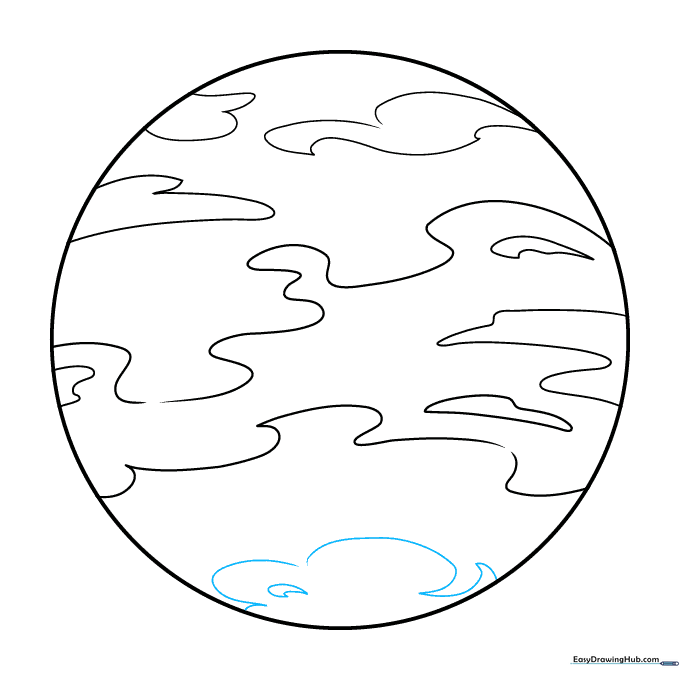
Repeat the process for the southern pole. Use curved lines that meet at sharp points to create a different look for the southern clouds.
Step 9: Final Touches
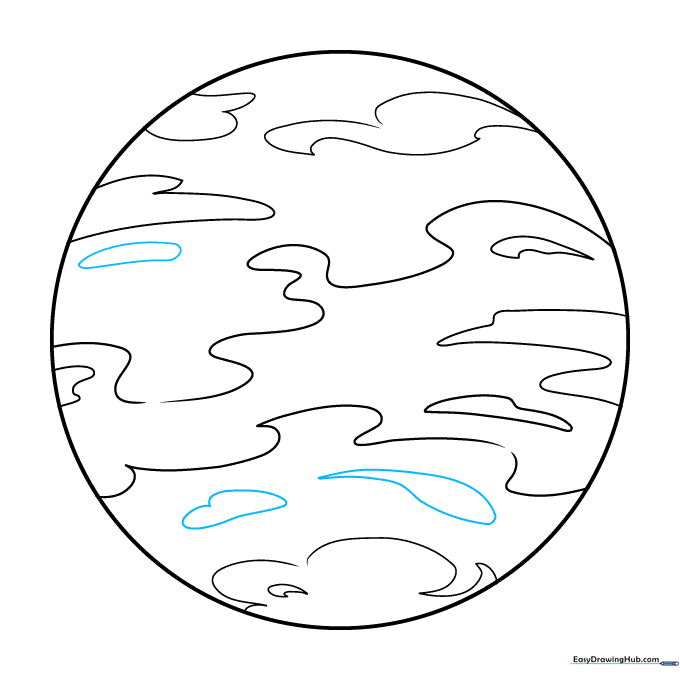
Fill in any empty spaces with a few final irregular shapes. Your Venus outline is now complete! Time to color: use warm yellows, oranges, and hints of red to capture the planet's intense heat.
Coloring Your Venus
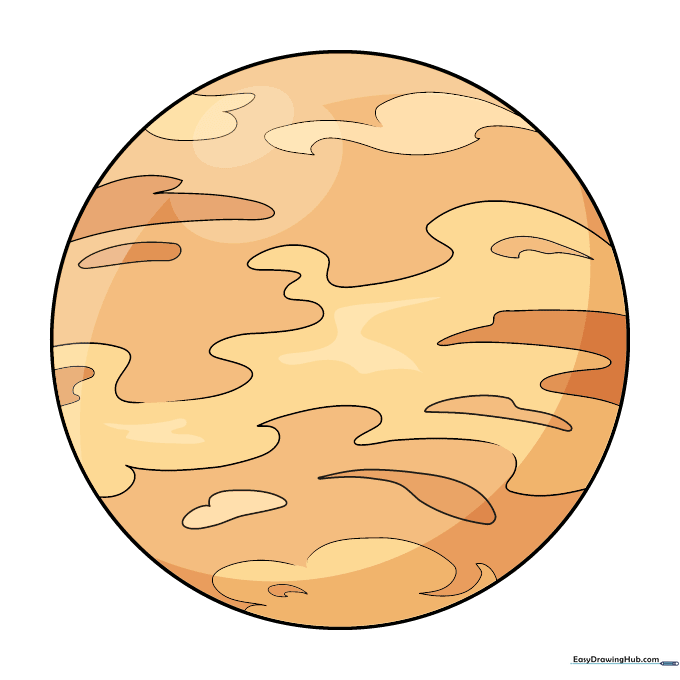
Venus is a desert-like world with clouds 42 miles thick. Use your brightest oranges and yellows to color the surface, reflecting how these clouds trap sunlight.
More Tutorials


