How to Draw an Umbrella: Simple 10-Step Guide for Kids
This step-by-step tutorial is perfect for young artists ages 5 and up. All you need is a pencil, an eraser, and a piece of paper to get started. Follow along to build confidence in your drawing skills and create a fun, rainy-day masterpiece.
🎯 Final Result
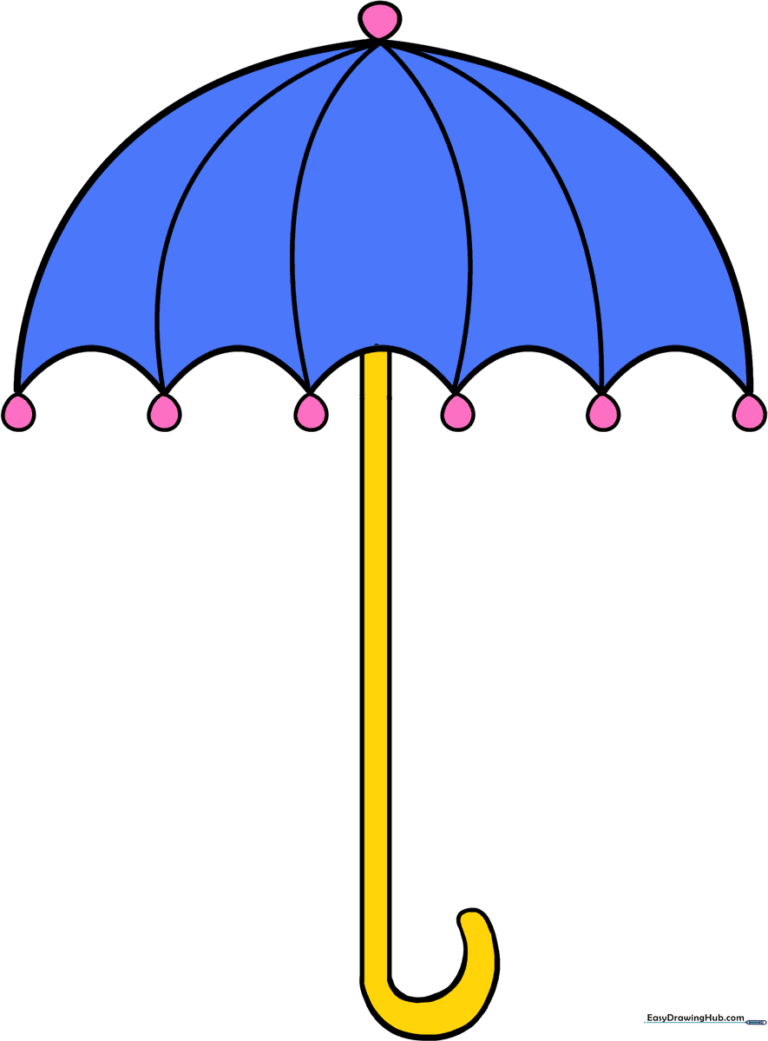
Step-by-Step Instructions
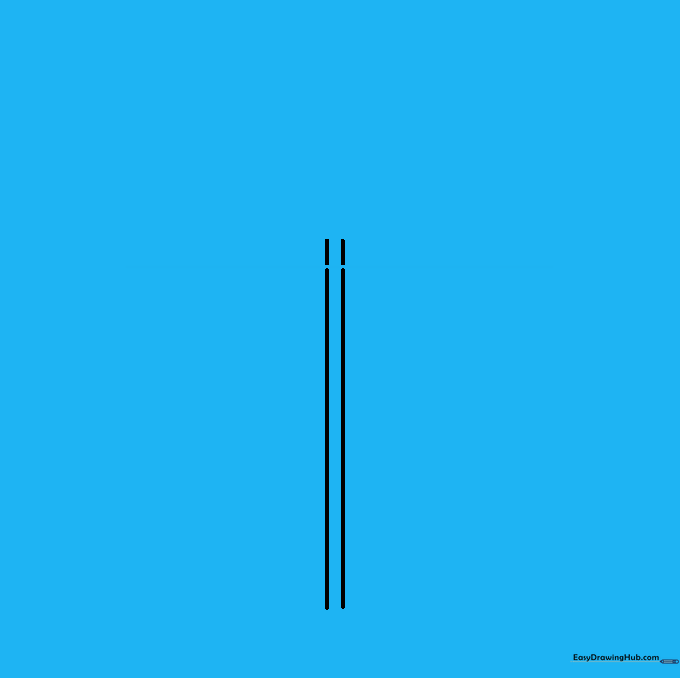
Step 1: Sketching the Central Shaft

Draw a straight, vertical line to act as the umbrella's spine. Teacher's Tip: Use a ruler if you want it perfectly straight, but freehand is great for practicing steady hands!
Step 2: Thickening the Shaft

Draw a second vertical line parallel to the first. Teacher's Tip: Keep them close together to make the shaft look sturdy and realistic.
Step 3: Establishing the Canopy Base
Draw a horizontal line near the top of your shaft. Teacher's Tip: This is a 'guide line,' so draw it very lightly—you will be erasing it later!
Step 4: Creating the Scalloped Edge

Add a series of small, connected curves along your horizontal guide line. Teacher's Tip: Imagine you are drawing a row of little hills or bumps.
Step 5: Cleaning Up the Guide

Carefully erase the straight horizontal line beneath your curves. Teacher's Tip: Use a soft eraser and brush away the crumbs so your paper stays clean.
Step 6: Drawing the Canopy Top

Connect the ends of your scalloped line with a large, gentle arch. Teacher's Tip: Try to make this curve smooth and symmetrical for a professional look.
Step 7: Adding the Handle

Draw a 'U' shape at the bottom of the shaft and connect it back. Teacher's Tip: Make the handle look like a classic 'J' hook for that traditional umbrella style.
Step 8: Adding Structural Details

Draw a small circle at the very top and one at each point of the scalloped edge. Teacher's Tip: These represent the tips of the spokes—they make your drawing look much more realistic!
Step 9: Defining the Panels
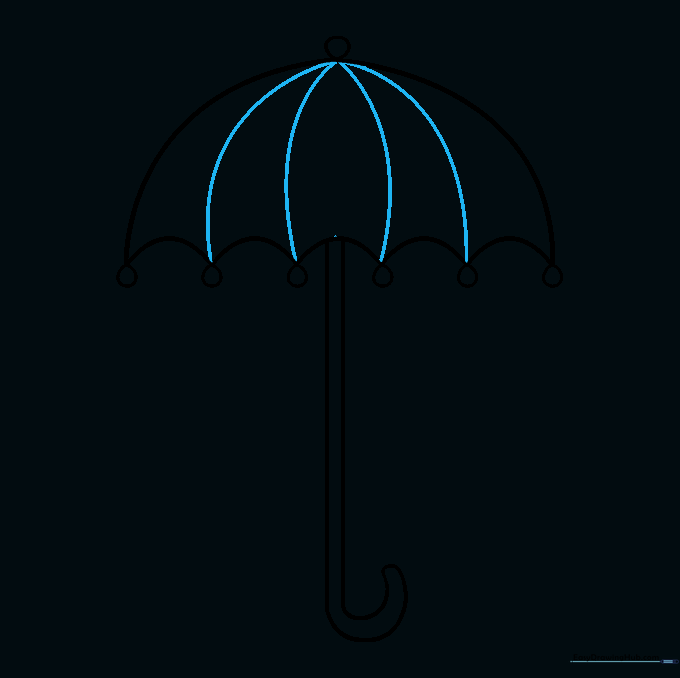
Draw curved lines connecting the top circle to each scalloped point. Teacher's Tip: These lines show the fabric panels. Keep them light so they don't overpower the outline.
Step 10: Bringing It to Life with Color

Time to color! Use bright, bold colors for the panels. Teacher's Tip: Try alternating colors for a fun, striped pattern, or use a single color for a classic look.
More Tutorials


