How to Draw the Sun’s Layers: Easy Science Art Lesson
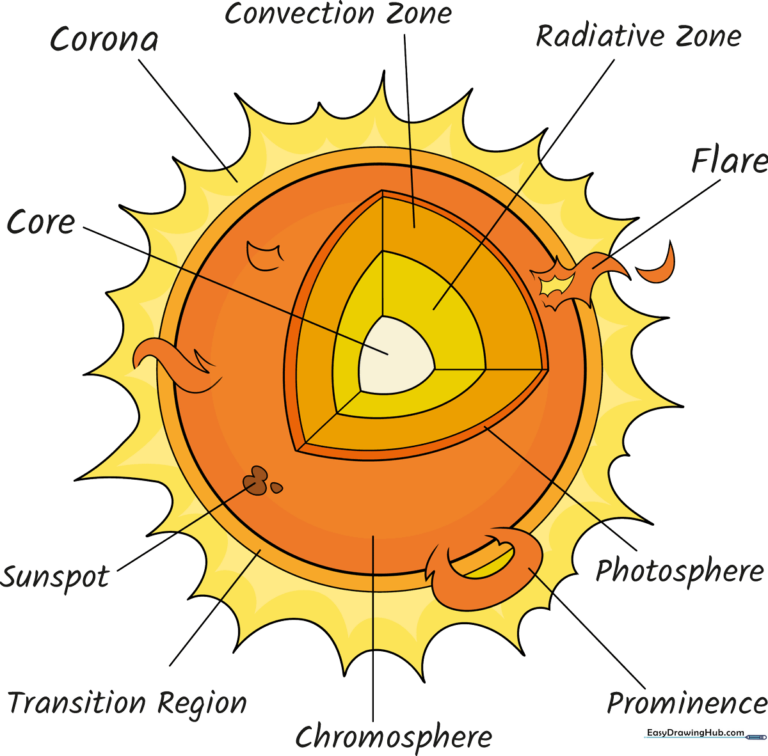
Combine art and astronomy with this step-by-step guide to drawing the anatomy of the sun. Designed for young learners, this project requires only paper, a pencil, and markers to visualize the core, corona, and solar flares. It’s a fantastic way to reinforce science concepts while practicing precise line work.
🎯 Final Result
Step-by-Step Instructions
Step 1: Sketching the Main Body
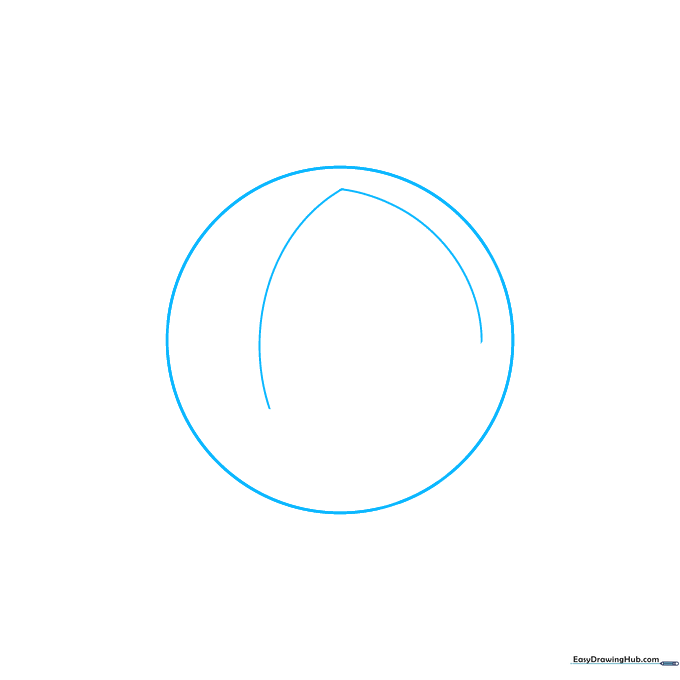
Start by drawing a large, light circle to represent the sun's outer boundary. Inside, sketch two curved lines that meet at a point to create a 'slice' or cross-section. Teacher's Tip: Use a light touch with your pencil so you can easily erase your guidelines once the final drawing is complete.
Step 2: Defining the Inner Layers
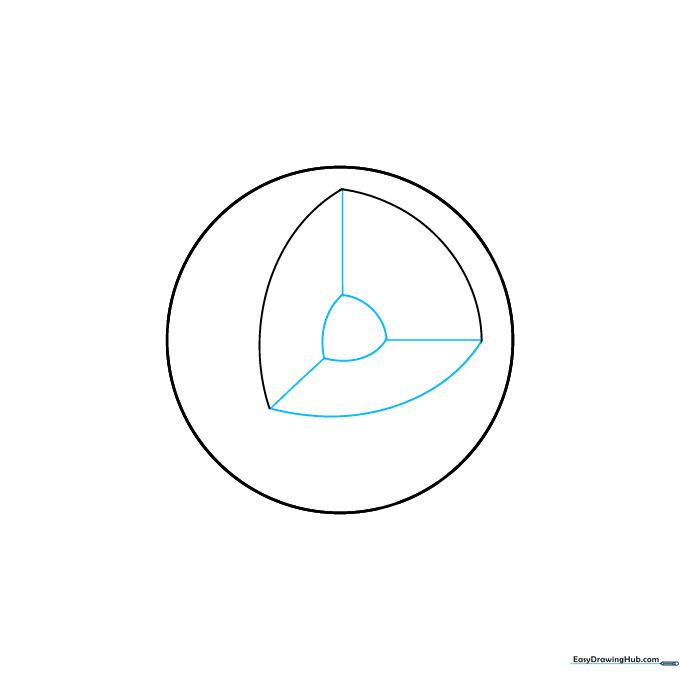
Connect the lines from your wedge with a curved base. Add a smaller, bulging triangle shape inside to represent the sun's core. Teacher's Tip: Keep your shapes rounded rather than sharp to mimic the fluid, gaseous nature of the sun.
Step 3: Adding Structural Layers
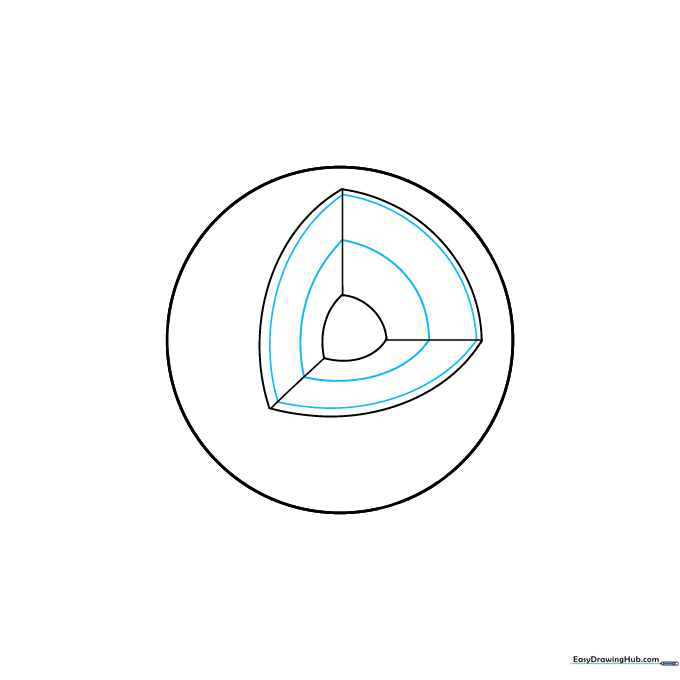
Draw two additional bulging triangle shapes within the first section to represent the radiative and convection zones. Teacher's Tip: Think of these as 'onion layers'—each one gets slightly larger as you move outward from the center.
Step 4: Drawing the Solar Rays
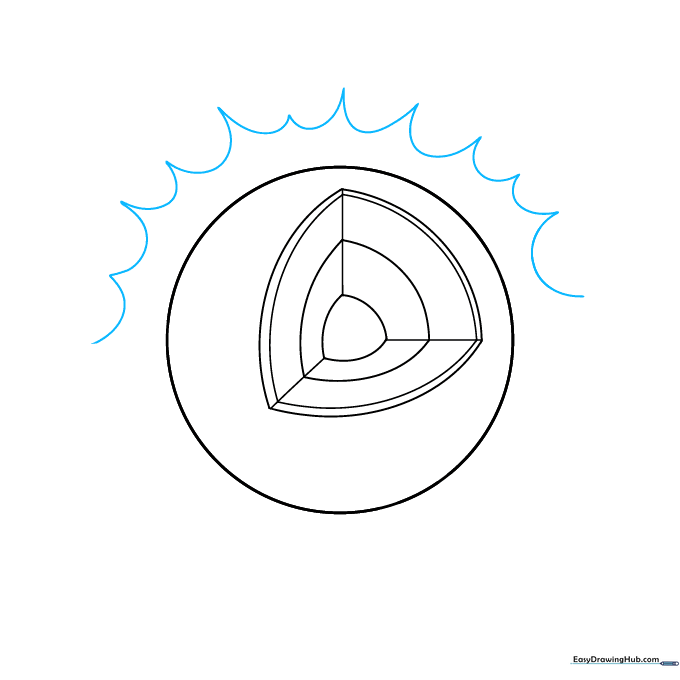
Begin creating the sun's outer glow by drawing a series of curved lines that meet at sharp points around the circle. Teacher's Tip: Vary the size of these points to make the sun look more dynamic and energetic.
Step 5: Completing the Outer Edge
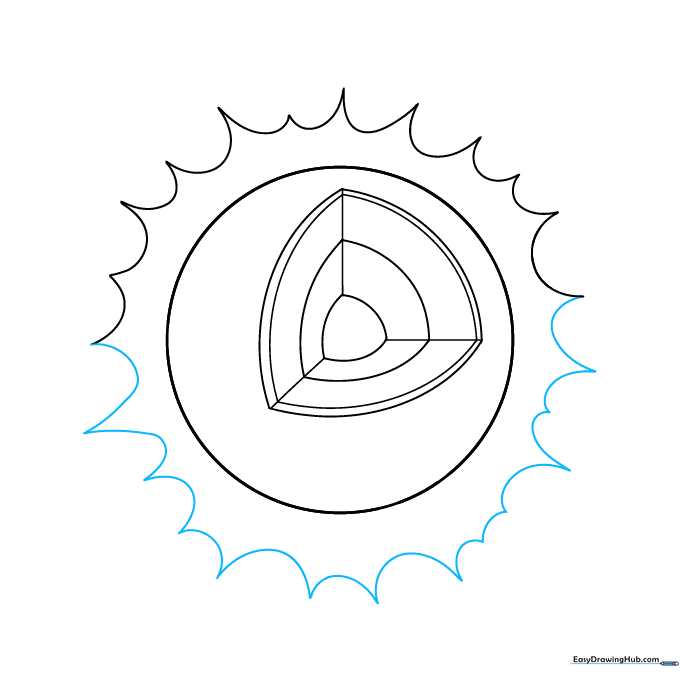
Continue adding these pointed, flame-like shapes all the way around the circle until the entire perimeter is covered. Teacher's Tip: Don't worry about making them perfectly symmetrical; the sun is a chaotic, active star!
Step 6: Adding Solar Flares
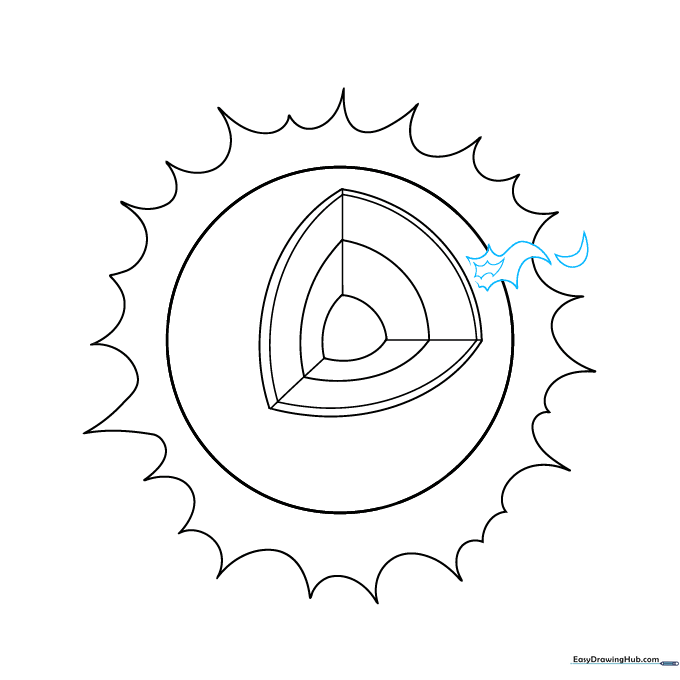
Draw a large, flamelike solar flare extending from the edge of the sun. Use jagged, curved lines. Teacher's Tip: If you make a mistake, use a kneaded eraser to gently lift the graphite without damaging the paper.
Step 7: Detailing the Surface
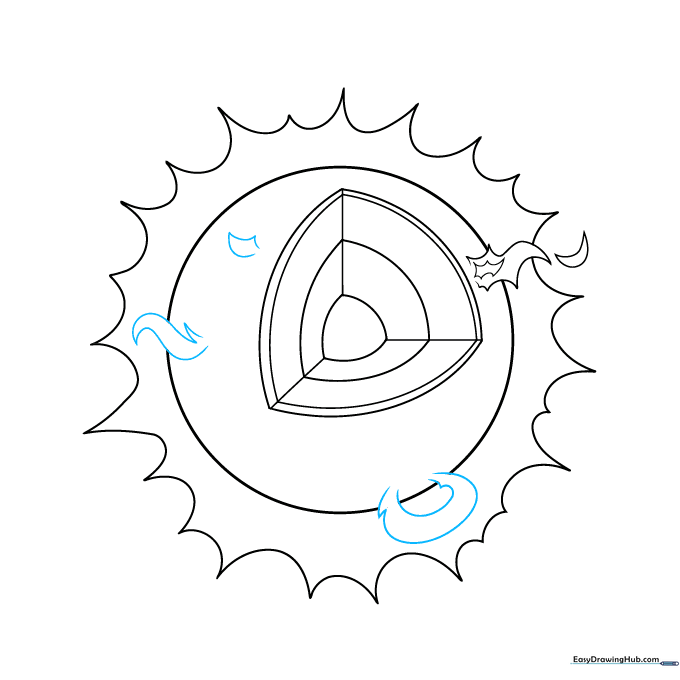
Add more solar flares of varying sizes along the edges. Teacher's Tip: Use quick, flicking motions with your pencil to create the sharp, energetic look of a flare.
Step 8: Labeling the Anatomy
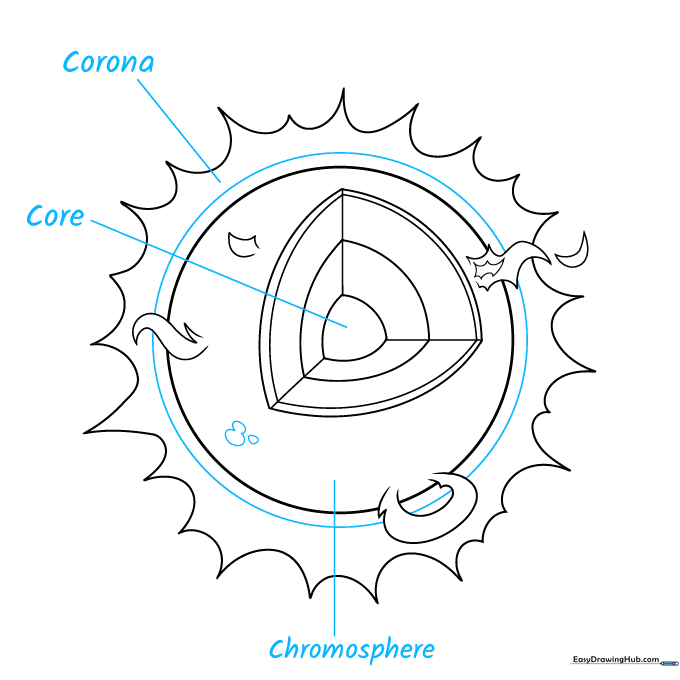
Draw a larger circle around the sun to define the outer corona. Add small circles on the surface for sunspots. Finally, draw lines from the core, corona, and chromosphere to prepare for your labels. Teacher's Tip: Use a ruler for your label lines to keep the diagram looking professional and clean.
Step 9: Finalizing the Labels
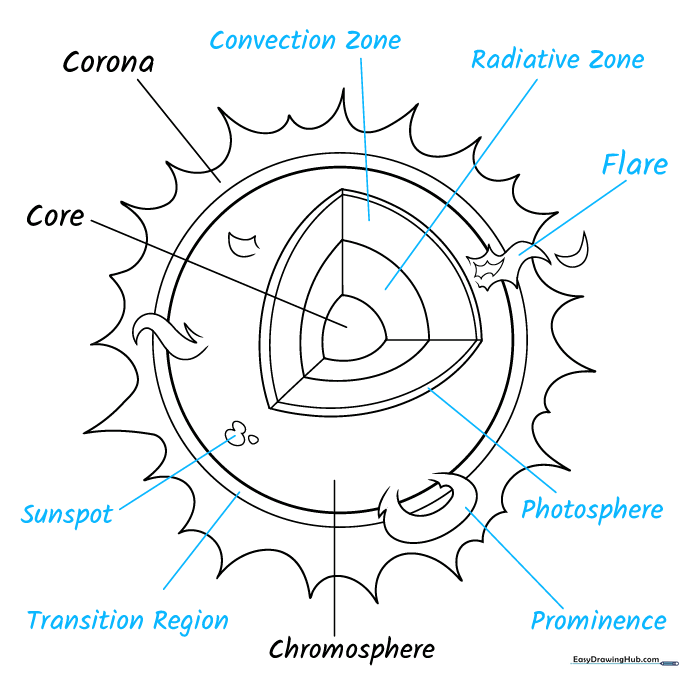
Complete your diagram by labeling the convection zone, radiative zone, photosphere, prominence, and sunspots. Teacher's Tip: Write your labels in neat, block letters so they are easy to read as part of your science project.
Step 10: Adding Color
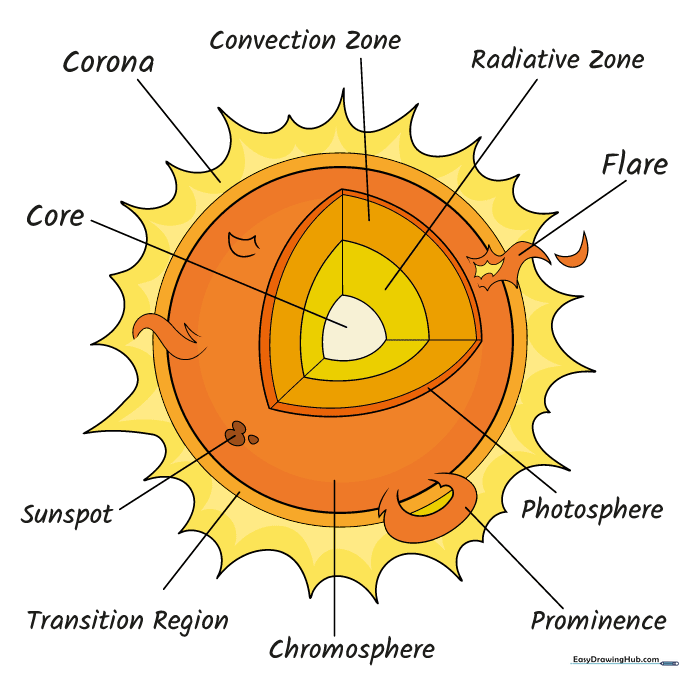
Bring your sun to life! Use warm colors like yellow for the photosphere, orange for the convection zone, and deep reds for the core. Teacher's Tip: Use light pressure with your crayons to create a soft, glowing gradient effect.
More Tutorials


