How to Draw a Rainbow Flower: Easy 10-Step Guide
Bring a burst of color to your sketchbook with this friendly rainbow flower! Designed for ages 5 and up, this project requires only a pencil, eraser, and your favorite markers or crayons. Follow along to practice basic shapes and symmetry while creating a vibrant piece of art.
🎯 Final Result

Step-by-Step Instructions
Step 1: Sketching the Center

Draw a neat circle to serve as the flower's face. Above the center, add two small, rounded 'M' shapes for the eyebrows. Teacher's Tip: Keep your pencil pressure light so you can easily adjust the size if the face looks a bit lopsided.
Step 2: Adding Facial Features

Add two circles for the eyes and a gentle curve for the smile. Shade in the pupils to give your flower a lively expression. Teacher's Tip: Leave a tiny white dot unshaded in each pupil to create a 'sparkle' effect, making the character look more animated.
Step 3: Defining the Mouth and First Petal

Complete the mouth with a curved line and a small tongue. Then, draw your first petal by extending a curved line from the top of the face and looping it back. Teacher's Tip: Think of the petal shape like a long, rounded teardrop.
Step 4: Building the Petal Ring

Continue adding petals around the face using long, smooth curved lines. Teacher's Tip: Try to space them evenly like the hands on a clock to keep your flower balanced.
Step 5: Expanding the Petals
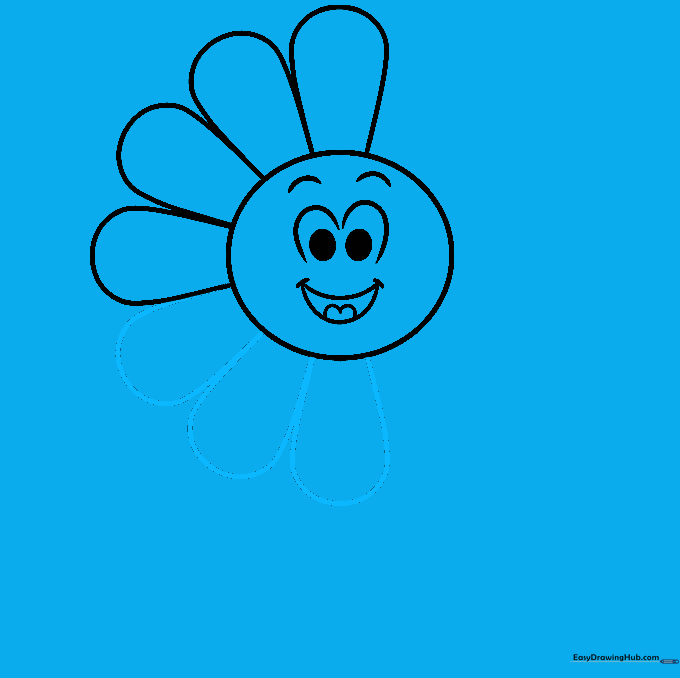
Keep adding petals until you have filled the space around the face. Teacher's Tip: Don't worry if they aren't perfect; nature is full of unique shapes!
Step 6: Filling the Gaps
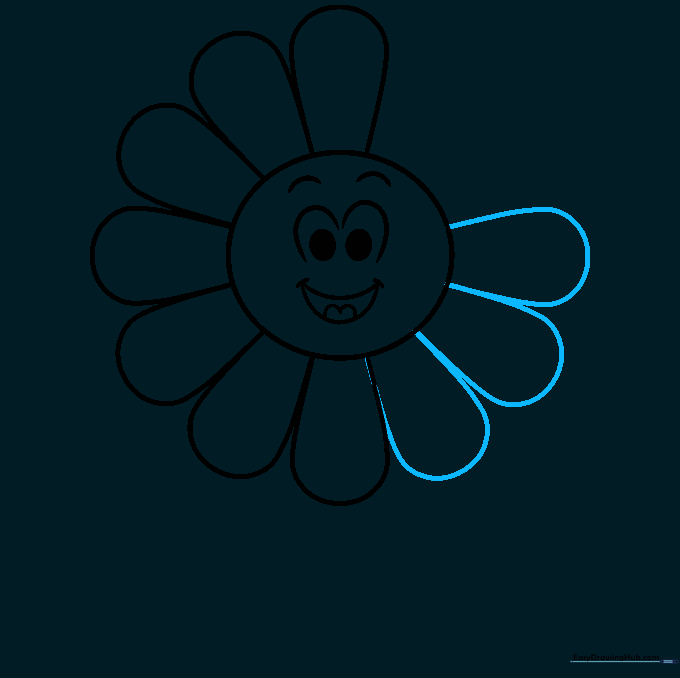
Add a few more petals to ensure the flower looks full and lush. Teacher's Tip: Vary the width of your petals slightly to give the drawing a more organic, hand-drawn feel.
Step 7: Drawing the Stem
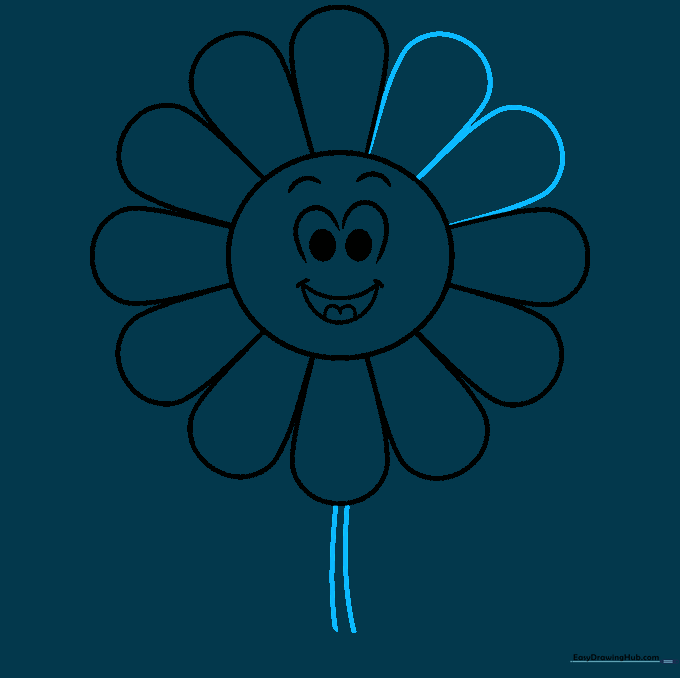
Finish the petal ring, then draw two parallel curved lines extending downward from the center to create the stem. Teacher's Tip: Keep the stem lines close together to make the flower look sturdy.
Step 8: Adding Leaves

Draw a teardrop-shaped leaf on each side of the stem. Teacher's Tip: Draw a small line down the center of each leaf to represent the vein.
Step 9: Grounding the Drawing

Draw a series of small, jagged curves at the bottom to create grass, and a long horizontal line behind the flower for the horizon. Teacher's Tip: This adds depth to your drawing, making it look like the flower is standing in a garden.
Step 10: Bringing it to Life with Color

Time to color! Use the full spectrum of the rainbow for your petals. Teacher's Tip: If you have more petals than colors, try blending two colors together—like yellow and orange—to create a beautiful gradient effect.
More Tutorials


